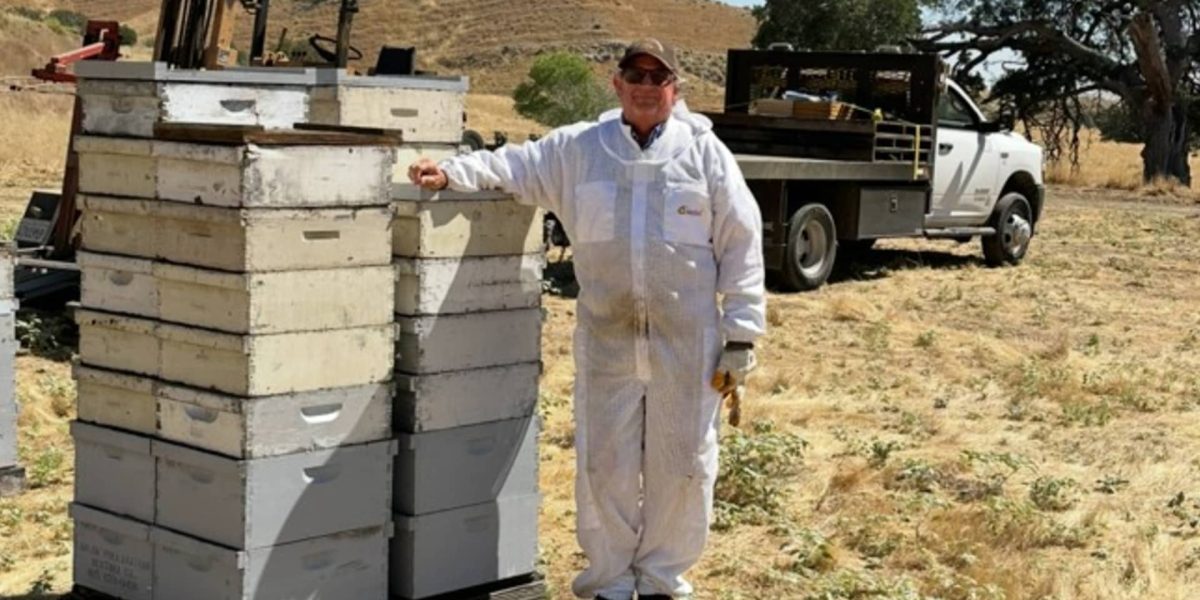
David Bradshaw, a 70-year-old honey bee farmer, is defying the odds to keep his family farm alive in Visalia, California.
Beekeeping in a Changing World
Beekeeping is harder than ever, with colonies facing threats from climate change, pesticides, and disease. Despite these challenges, Bradshaw is determined to protect his hives and save his family farm.
Bradshaw’s father, Howard Bradshaw, founded Bradshaw Honey Farms back in the 1960s. The farm has been in the family for two generations, and Bradshaw is the current owner. He’s seen it all – the good times and the bad – and he’s committed to keeping the farm afloat.
“We completely rely on Mother Nature,” Bradshaw said. “The bees do all the work, and we just try to provide them with the best possible environment to thrive.”
The Struggle to Keep Bees Alive
Bradshaw’s farm is just one of many struggling to keep bees alive. Colony collapse disorder, a phenomenon where worker bees disappear or die, has been a major issue in recent years. This has led to a decline in bee populations, which is having a ripple effect on the environment and the economy.
Bradshaw believes that the key to keeping bees alive is to use sustainable practices and to work with nature, rather than against it. He’s implemented a number of measures on his farm, including using natural pesticides and creating bee-friendly habitats.
A Sustainable Future
What this means for the future of beekeeping is a shift towards more sustainable and environmentally-friendly practices. By working with nature, rather than against it, beekeepers like Bradshaw can help to protect their bees and preserve the health of the ecosystem.
For Bradshaw, it’s about preserving a piece of family history and the legacy of his father’s farm. “I want to be able to pass this down to my children and grandchildren,” he said. “I want to make sure that the farm stays in the family for generations to come.”