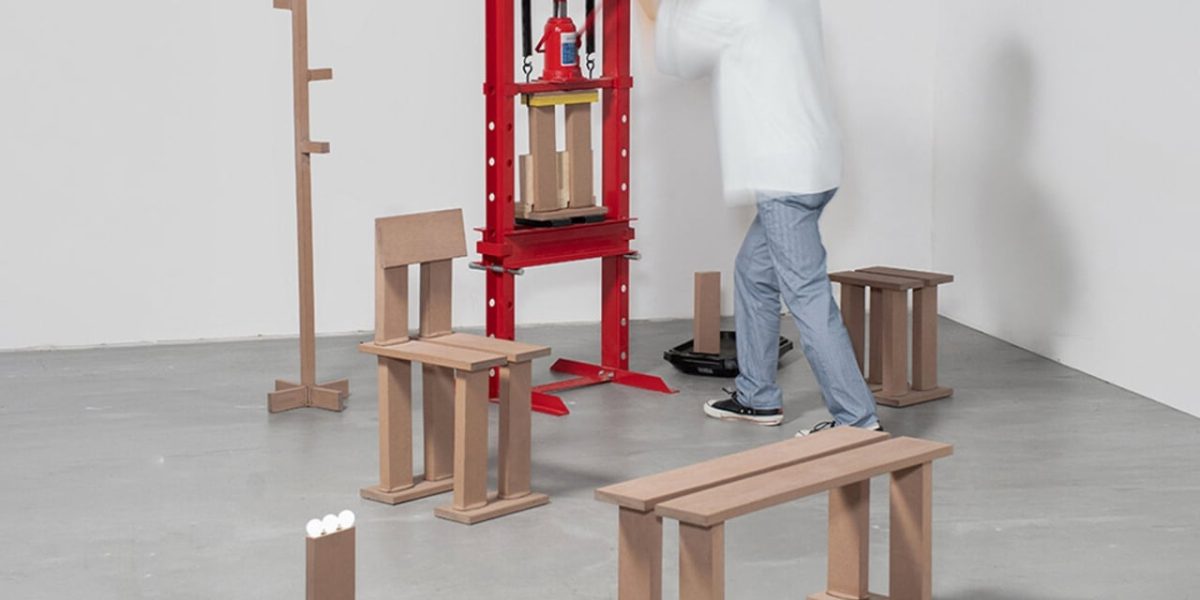
Prefabricated perfection: Japanese designer crafts glue-free furniture
Japanese designer Takashi Yamaguchi has done the unthinkable: he’s built functional, beautiful furniture without using a single drop of glue or a single screw. Yamaguchi’s innovative approach challenges conventional wisdom on how to craft solid, long-lasting pieces that won’t fall apart at the slightest provocation.
Most furniture is held together by things you can’t see: mortise-and-tenon joints, steel brackets, wood glue applied in generous amounts before being clamped overnight. The craft of traditional joinery relies heavily on these invisible fixings, which are then reinforced by screws, nails, or – in high-end applications – expensive mechanical fasteners.
Yamaguchi’s design philosophy bucks this trend by focusing on the material properties of the wood itself. ‘I want to see the beauty of the material,’ he explains in a recent interview. By using the natural characteristics of the wood to create complex, interlocking structures, Yamaguchi can craft pieces that are both visually stunning and remarkably durable.
The designer uses traditional Japanese woodworking techniques, like tsugi and kaku-mushi – where small, intricately-cut joints are used to connect seemingly disparate components. The results are a testament to the beauty and precision of human craftsmanship, elevated to new heights by Yamaguchi’s innovative spirit.
Yamaguchi’s glue-free furniture is not only aesthetically striking; it also offers several practical advantages. No adhesive or fasteners means no mess, no waiting for clamps to dry, and no risk of chemicals or metal contamination affecting the wood’s natural properties. This makes the design process faster, cleaner, and more efficient.
What this means for consumers is a fresh wave of innovative, high-quality furniture that combines exceptional craftsmanship with minimal environmental impact. As designers like Yamaguchi continue to push the boundaries of traditional woodworking techniques, we can expect to see more sustainable, elegant solutions that put the material itself at the forefront of design.
The implications of Yamaguchi’s work extend beyond the realm of interior design as well. If his approach can be scaled up and adapted for mass production, it could revolutionize the way we think about manufacturing and building materials – potentially paving the way for a more sustainable, waste-reducing future for the industry as a whole.