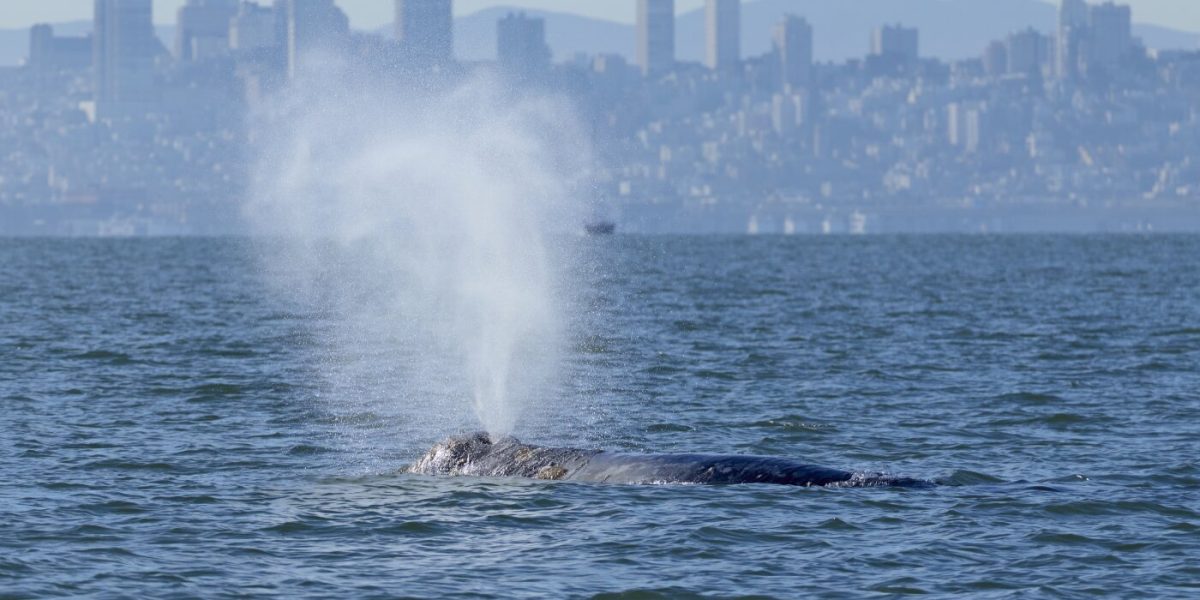
Around 20,000 gray whales pass through San Francisco Bay each year, a dramatic increase from the handful seen a decade ago.
These whales are being lured into the bay by a changing climate, which has disrupted their traditional migration routes and led to a surge in ship strikes. At least one whale has died in the bay in recent years after being hit by a cargo ship.
To address this issue, a new camera system has been installed in the bay. The system uses artificial intelligence (AI) to detect and track whales, alerting ships and ferries to their presence.
Using AI to Prevent Ship Strikes
The camera system is part of a larger effort to reduce the risk of ship strikes in the bay. It uses a combination of thermal imaging and machine learning algorithms to detect whales and track their movements. The system has been shown to be highly effective, with a detection rate of over 90%.
Protecting Whales in a Busy Waterway
San Francisco Bay is one of the busiest waterways in the country, with thousands of ships and ferries passing through it each year. The bay is also home to a diverse range of marine life, including the gray whales that are now making regular appearances.
The new camera system is an important step in protecting these whales and preventing further ship strikes. It’s a reminder of the need to balance human activity with the needs of the marine ecosystem, and to take steps to mitigate the impacts of climate change on marine life.
A New Era of Maritime Safety
The use of AI in maritime safety is a growing trend, with several countries already adopting similar systems. The San Francisco Bay system is one of the most advanced, and could serve as a model for other cities and waterways.
What this means is that we can expect to see more whales in San Francisco Bay in the coming years. But with the help of AI and advanced camera systems, we can also reduce the risk of ship strikes and promote a safer, more sustainable relationship between humans and marine life.