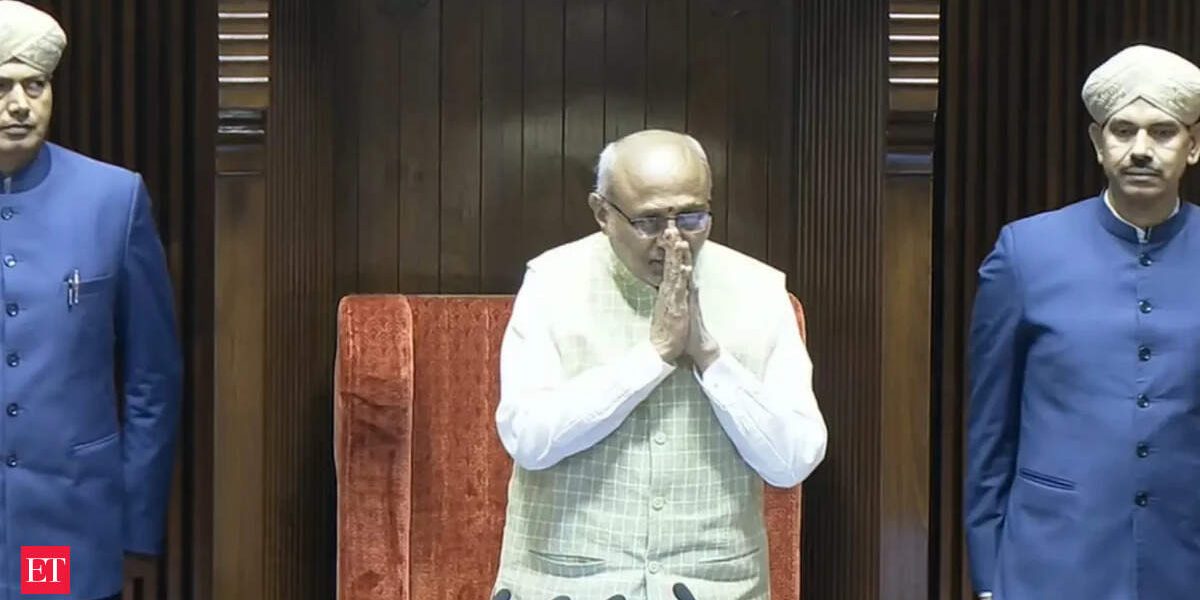
RS Chairman C.P. Radhakrishnan’s call to arms for India’s new parliamentarians has sparked debate about the role of AI in shaping the country’s democratic institutions.
A Bridge Between Tradition and Innovation
At an orientation program for new members of the Rajya Sabha, Vice-President C.P. Radhakrishnan emphasized the importance of finding a balance between respecting parliamentary traditions and embracing cutting-edge technologies like Artificial Intelligence. This approach reflects the complex challenges faced by modern democracies, where preserving the essence of representative governance must be reconciled with the demands of a rapidly digitizing world.
Radhakrishnan’s message to the new parliamentarians was clear: they should strive to be not just informed users but also proactive custodians of AI-driven tools and technologies that could enhance legislative performance and improve public engagement.
The Imperative of Continuous Learning
The Rajya Sabha Chairman’s call to continuous learning and mastery of legislative procedures will be crucial in the years to come. As the Indian polity navigates the intricacies of technological change, parliamentarians will have to navigate multiple stakeholders, data streams, and emerging technologies to stay informed, connected, and responsive to their constituents.
Moreover, they will have to stay adaptable, as new technologies and their applications continue to evolve and mature over time. This imperative is unlikely to diminish in the face of an increasingly complex policy environment.
What this means
Radhakrishnan’s advice should be taken seriously by all parliamentarians, not just those new to the Rajya Sabha. As AI continues to transform the public sphere, they must be equipped to address issues related to AI-driven governance, data security, digital rights, and digital divides.