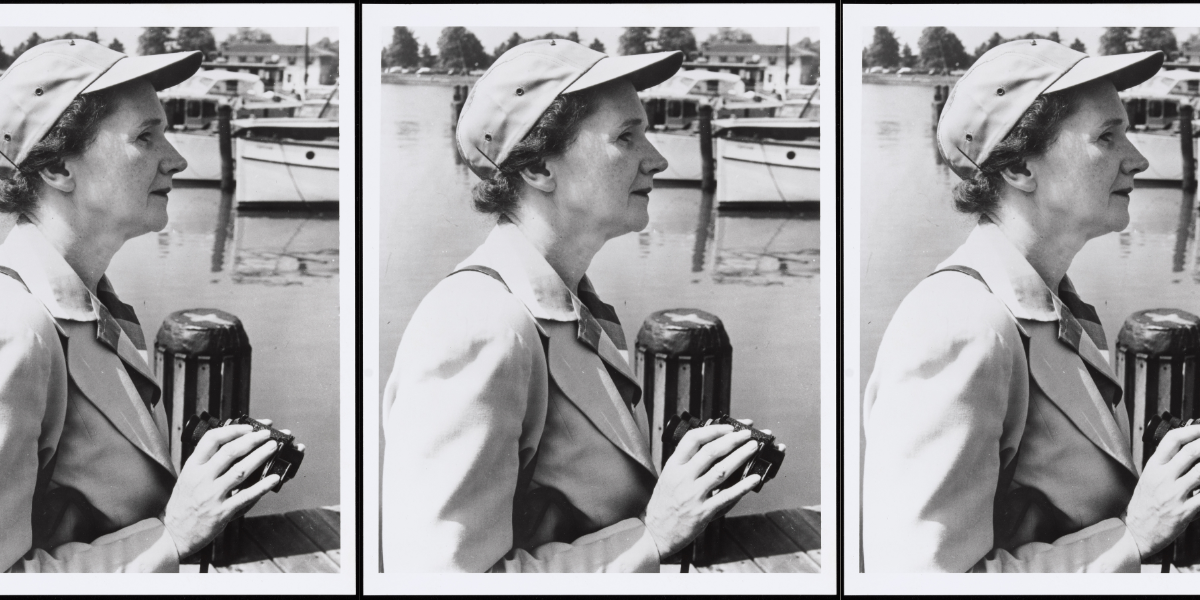
Biologist and author Rachel Carson’s influence on environmental conservation has long been overlooked in the AI era, despite her pioneering work in the 1950s. However, AI developers are now exploring the intersection of environmentalism and technology, sparking new conversations around Carson’s work.
Carson’s Environmental Vision
Carson’s bestselling book The Sea Around Us (1951) was a turning point in the environmental movement, highlighting the impact of human activities on the ocean’s ecosystems. In her acceptance speech for the National Book Award, Carson observed, “If there is poetry in my book about the sea, it is not because I deliberately put it there, but because I listen to what the sea has said to me in the silence of my soul.” Carson’s writing style, which blended science and literary prose, captivated readers and raised awareness about the interconnectedness of the natural world.
AI and Environmental Conservation
Today, AI researchers are leveraging machine learning and computer vision to monitor ocean health, detect pollution, and study climate change. For example, a team of scientists at the University of California, Berkeley, has developed an AI-powered system that uses satellite imagery and machine learning to track global ocean temperatures. This technology can help scientists predict and prepare for ocean acidification, which threatens marine ecosystems.
What this means
Carson’s legacy serves as a reminder that environmental conservation requires a multidisciplinary approach. AI developers can learn from Carson’s example by incorporating artistic expression and intuitive storytelling into their work. As AI becomes increasingly integral to environmental conservation efforts, we can expect to see more innovative applications of technology in protecting the natural world. By listening to the “poetry of the sea,” as Carson would say, we can foster a deeper appreciation for the intricate relationships between humans and the environment.