**Taiwan’s Grip on Advanced Chip Packaging Threatens U.S. Semiconductor Ambitions**
The Biden administration’s push to decentralize semiconductor manufacturing from Taiwan to the United States has hit a snag, courtesy of Taiwan’s stranglehold on advanced chip packaging technology.
This critical component of semiconductor manufacturing allows multiple chips to be stacked and connected within a single package, increasing the efficiency of complex systems like smartphones, laptops, and servers. Despite Taiwan’s dominance in this field, the U.S. has invested heavily in creating new manufacturing hubs, with a combined $52 billion allocated for incentives and research grants since 2022.
Why Taiwan’s Lead is Hard to Catch
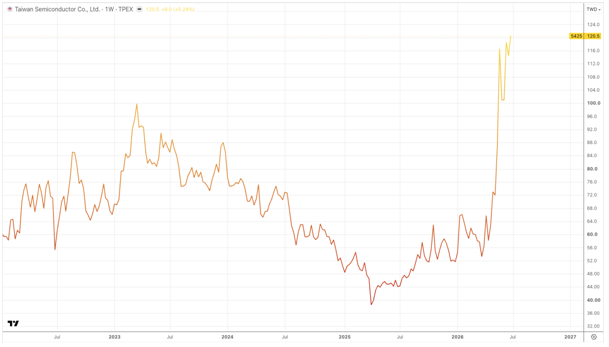
Taiwan Semiconductor Manufacturing Co. (TSMC), a Taiwanese company, has been the industry leader in advanced chip packaging for over a decade. Its expertise has allowed it to cater to the demanding needs of the world’s top tech companies. The company’s advanced manufacturing facilities in Taiwan are renowned for their high capacity and precision, making it nearly impossible for U.S. manufacturers to replicate these capabilities in a short span.
The U.S. Struggles to Keep Up
The U.S. government’s efforts to develop its own chip packaging industry have faced significant challenges. The U.S. Department of Commerce has invested heavily in companies like Micron Technology and GlobalFoundries, aiming to create a domestic supply chain for chip packaging. However, progress has been slow, and the lack of a proven track record has raised questions about the feasibility of replacing TSMC’s dominance.
What this means
The reliance on Taiwan for advanced chip packaging highlights the complex interdependencies within the global semiconductor supply chain. As tensions between the U.S. and China escalate, Washington’s efforts to diversify its manufacturing base may be undermined by the absence of a reliable domestic alternative. The consequences of this situation could be far-reaching, affecting not only the U.S. tech industry but also global trade dynamics. With billions of dollars invested in semiconductor manufacturing, the U.S. is now facing the prospect of a costly reversal of fortunes.