Dongfang Suanxin, a Chinese AI chip startup, just exited stealth mode with a big claim: its 3D stacked chips can bypass US export controls. This move could have huge implications for the global tech landscape, challenging the United States’ influence and fueling China’s push towards a self-sufficient tech ecosystem.
The company’s CEO, Wang Haichao, is betting on near-memory computing architecture, which packs more transistors into a smaller space by integrating memory and processing units. This design allows for faster data transfer, making it perfect for applications like AI, autonomous vehicles, and even smartphones.
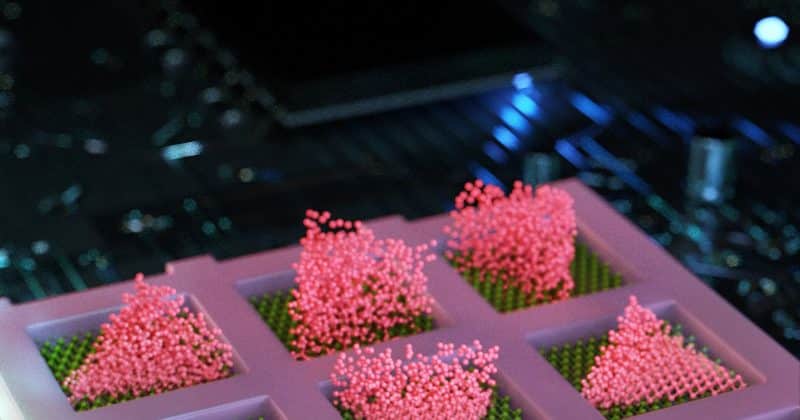
Dongfang Suanxin’s approach is different from the traditional method of using discrete transistors and wires. By stacking multiple layers of transistors and memory on top of each other, the company claims to have increased the density of its chips by up to 5x compared to traditional methods. This not only makes its chips faster but also more efficient.
Breaking the US-China tech stalemate
For years, the US has imposed strict export controls on semiconductor technology, citing national security concerns. This has led to a trade war between the two countries, with China accusing Washington of unfairly restricting its access to critical tech.
Dongfang Suanxin’s move is the latest attempt by Beijing to break free from these restrictions. By developing its own 3D stacking technology, the company can create chips that are not dependent on US-made equipment or software. This not only helps China’s tech industry but also gives the country a new bargaining chip in its negotiations with Washington.
A wake-up call for the global tech industry
The implications of Dongfang Suanxin’s innovation go beyond the US-China trade dynamic. It’s a signal that other countries, particularly those in Asia, are catching up with the West in terms of semiconductor technology.
This could lead to a significant shift in the global tech landscape, with new players emerging and old ones struggling to keep pace. As near-memory computing becomes more widespread, companies will need to adapt their strategies to stay competitive.
What this means for you
For consumers, Dongfang Suanxin’s technology could lead to faster and more efficient devices in the future. However, the bigger impact may be felt by companies and governments, who will need to rethink their approach to tech development and trade in the face of emerging competitors.