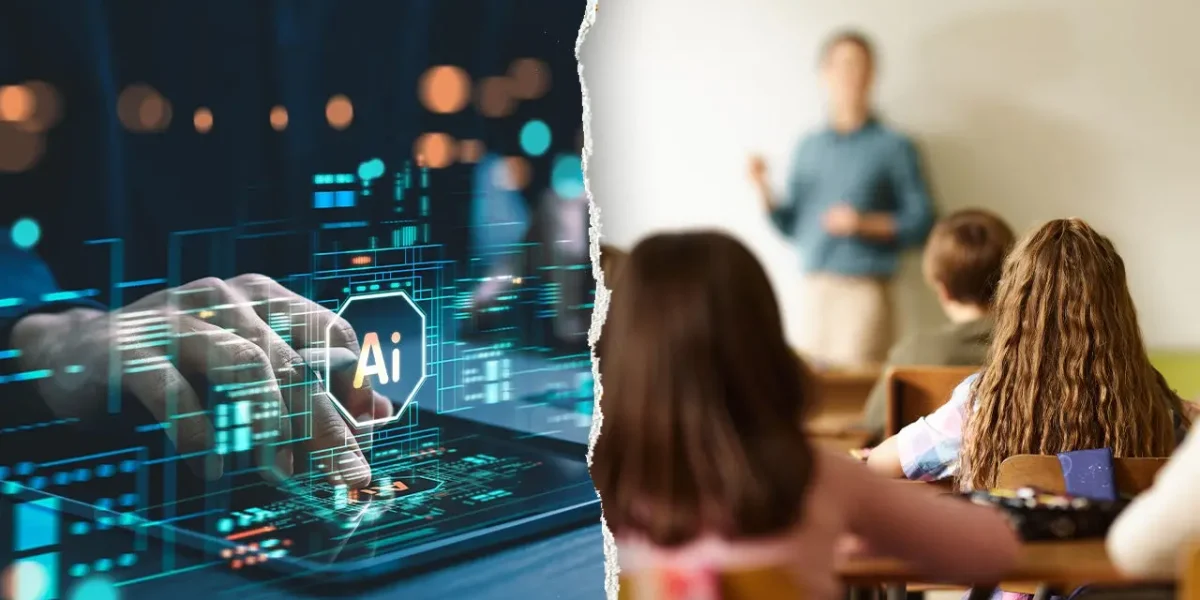
AI systems can now mimic teachers, spitting out personalized lesson plans and grading essays with surprising accuracy, but they still can’t shepherd a student’s soul, warn two education leaders.
Teachers in Training
William Bennett and Jon Hage, both respected voices in education, recently joined the discussion on AI’s role in classrooms at the Sun Valley conference. They expressed concerns that as AI assumes more teaching responsibilities, we risk losing the very essence of education: character development and human connection.
Bennett, a former U.S. Secretary of Education, emphasized that AI can replicate certain aspects of teaching but will always fall short when it comes to fostering empathy, resilience, and critical thinking. “AI can grade papers and track progress, but it can’t create a sense of belonging or encourage students to take risks,” he said.
The Human Touch
Hage, a well-known advocate for education reform, shares Bennett’s concerns. “AI can analyze data and provide insights, but it can’t replace the role of a teacher who has a personal connection with their students,” he said. “A teacher’s job is not just to impart knowledge but to inspire, motivate, and guide students as they navigate life’s complexities.”
Hage highlights the importance of character education, which he believes is often overlooked in the pursuit of academic achievement. “We need to focus on developing the whole child – their emotional intelligence, social skills, and moral values – and AI simply can’t replicate that.”
What this means
The take-home message from Bennett and Hage is that while AI can augment teaching, it’s not a substitute for human connection and character development. As AI increasingly becomes a part of classrooms, we need to establish clear ethical guardrails and ensure that character education remains a priority.