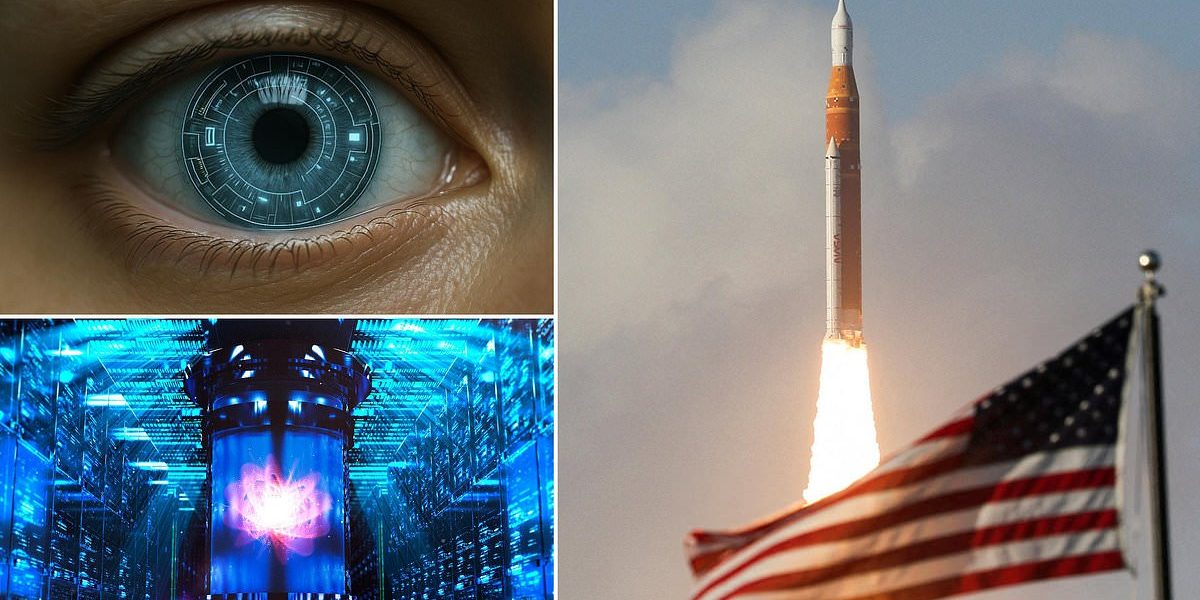
Next-Gen Space Exploration Could Send Humans to Mars in under 25 Years
Private companies like SpaceX and Blue Origin are pushing the boundaries of space travel, with plans to establish a human settlement on the Moon and send the first crewed mission to Mars in the next two and a half decades. These ambitious goals are part of a broader effort to create a multi-planetary society.
The US is already at the forefront of space exploration, with NASA’s Apollo 11 mission marking a historic milestone in 1969. Today, advancements in reusable rockets and advanced propulsion systems are making it more feasible to travel to other planets. Companies like SpaceX are working towards establishing a permanent human presence on Mars, which could pave the way for further exploration of the solar system.
The Rise of Artificial General Intelligence: Could it Solve Humanity’s Toughest Problems?
Researchers like Geoffrey Hinton, one of the pioneers of deep learning, believe that Artificial General Intelligence (AGI) could be developed within the next 25 years. AGI refers to the hypothetical AI system that can perform any intellectual task that humans can. While the prospect of AGI is both exciting and daunting, it also raises questions about the potential risks and benefits of such technology.
Proponents of AGI argue that it could be used to tackle some of humanity’s most pressing issues, such as climate change, disease, and poverty. By automating routine tasks and freeing up human resources, AGI could potentially accelerate scientific progress and improve quality of life for millions of people. However, experts also warn that unregulated AGI development could lead to unintended consequences, such as job displacement or loss of human agency.
What this means:
The next 25 years will be a transformative time for science and technology, with the potential to unlock new frontiers in space exploration and artificial intelligence. While the risks and benefits of these developments are still unclear, one thing is certain: they will shape the course of human history and require us to rethink our assumptions about the future.
Long-term Visions: A Glimpse into the Next 250 Years
Looking further ahead, experts predict that the next 250 years will be marked by even more profound transformations, including the potential for:
* Merging human and machine intelligence to create a new form of human-machine symbiosis
* Establishing a permanent human presence on other planets and in space
* Creating a global neurotechnological network that allows humans to interact directly with each other’s thoughts and experiences
While these visions may seem like science fiction today, they represent a realistic glimpse into the potential future of human progress and innovation.