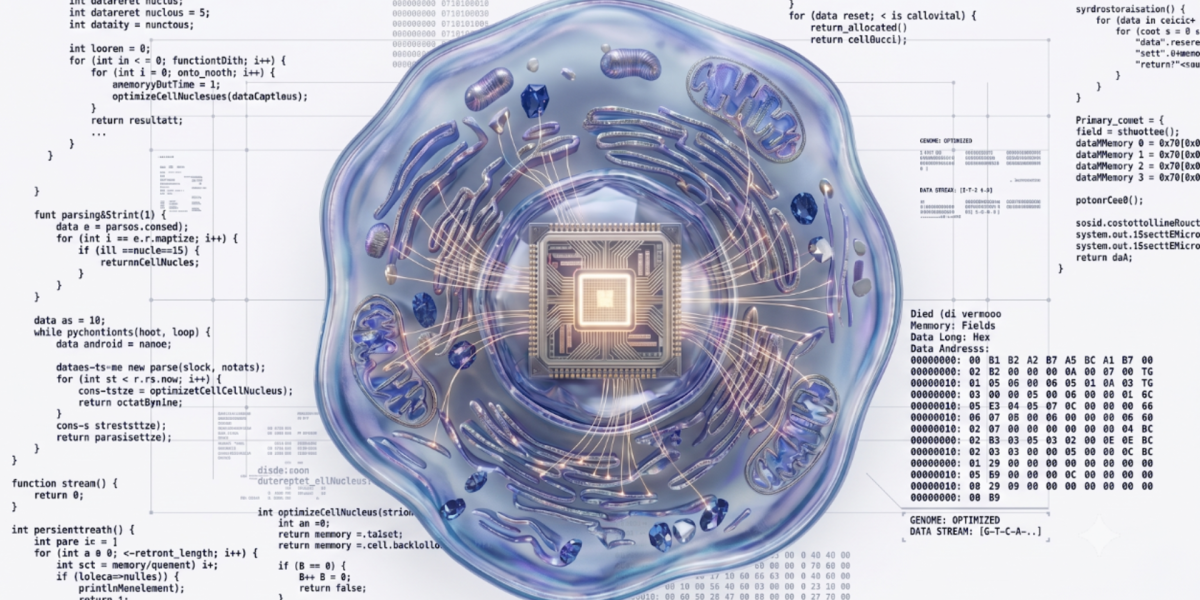
**Scientists Hack Human Cells to Compute Like Tiny Processors, Target Cancer**
Researchers at Hebrew University have successfully programmed human cells to compute biologically, responding autonomously to disease-related molecular signals internally. This innovation uses RNA trans-splicing to enable cells to process multiple biological signals using fewer genetic instructions simultaneously.
According to the study, the team employed a technique called “computational biology” to instruct human cells to recognize and respond to disease-related molecular patterns. Essentially, they turned human cells into tiny, biological computers that can execute complex computational operations efficiently.
**Biological Processors: A New Frontier in Medicine**
The process began with the development of RNA trans-splicing, a technique that allows researchers to edit and combine genetic instructions within cells. By reprogramming cells to recognize specific molecular signals, the team was able to create a system that can autonomously respond to disease-related patterns.
Using this approach, the researchers demonstrated that human cells can process multiple biological signals simultaneously, similar to how computer processors execute multiple instructions. This capability has significant implications for the development of future medicines.
**Targeting Cancer with Autonomous Cells**
One potential application of this technology is in the treatment of cancer. By programming cells to recognize and respond to specific disease-related molecular patterns, researchers can create autonomous cells that target cancer cells specifically.
Imagine a future where medicines are designed much like software, with cells programmed to execute specific tasks to combat diseases. This vision is becoming a reality, thanks to innovations in computational biology and RNA trans-splicing.
**What this means**: This breakthrough opens up new possibilities for the development of personalized, targeted therapies that can respond to specific molecular patterns in the body. In the future, medicines may be designed to program cells to execute complex computational operations, revolutionizing the way we approach disease treatment and prevention.