
A team of researchers has released a massive dataset of neural activity from macaque monkeys, offering a unique window into how nonhuman primates perceive and process visual information.
**The Triple-N Dataset Breaks the Mold**
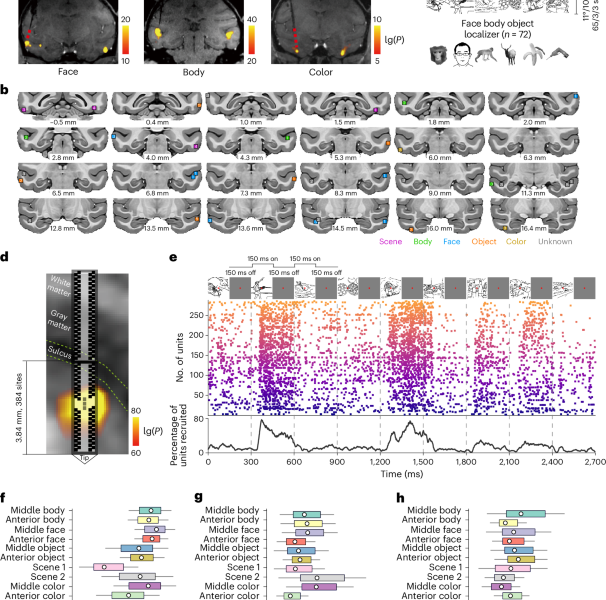
The **Triple-N dataset**, a culmination of over 15 years of research, contains **139,000** neural recordings from macaque monkeys observing natural scenes. The dataset was compiled using functional MRI-guided high-density electrophysiological recordings across macaque visual cortex, providing a rich resource for studying visual coding and cross-species comparisons.
Li et al.‘s work builds upon earlier research by Deng Jianxiong and colleagues, who developed the ImageNet database – a large-scale hierarchical image dataset used for image recognition tasks. The Triple-N dataset aims to bridge the gap between human and nonhuman primate visual systems, fostering new discoveries in the field of computer vision.
By analyzing the neural activity of macaque monkeys, researchers can gain insights into how the brain processes visual information, from edge detection to object recognition. This knowledge can have far-reaching implications for the development of more accurate and robust AI models.
**What This Means for AI Researchers**
The Triple-N dataset provides a unique opportunity for researchers to study the neural basis of visual perception in nonhuman primates. By leveraging this dataset, AI researchers can develop more sophisticated models of visual cognition, ultimately leading to better image recognition and processing systems. This, in turn, can have significant applications in areas like computer vision, robotics, and even healthcare.