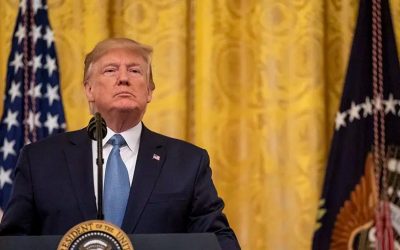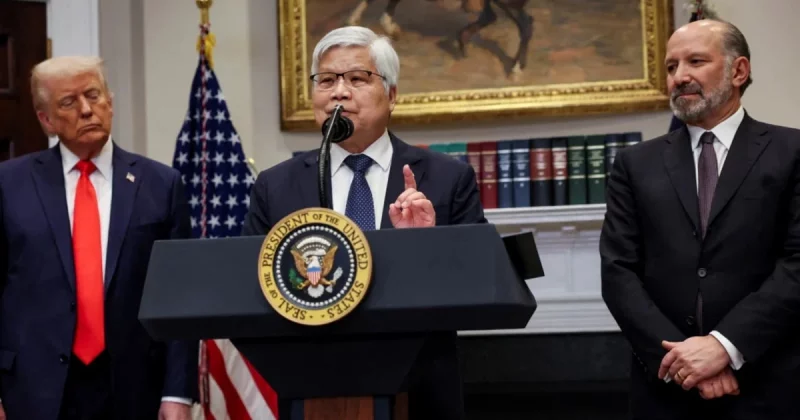
Taiwan’s President Tsai Ing-wen recently presented Donald Trump with a two-volume biography of Morris Chang, the founder of the world’s largest independent semiconductor manufacturer, Taiwan Semiconductor Manufacturing Company (TSMC). The gift is a carefully crafted diplomatic move that highlights Taiwan’s crucial role in US semiconductor ambitions, and also reflects the increasingly complex web of technological dependencies and geopolitical tensions between nations.
As TSMC invests a whopping $165 billion into its new facilities in Arizona, the move is seen as a bid to strengthen ties between Taiwan and the US, amidst simmering tensions over Taiwan’s status and its relations with China.
The biography, penned by Chang himself, offers a behind-the-scenes look at the history of TSMC and its rise to dominance in the semiconductor industry. But the gift is as much about politics as it is about business – it’s a strategic move by Tsai to bolster Taiwan’s position in the US-China tech rivalry.
Taiwan’s Semiconductor Ambition
TSMC has become a crucial player in the global semiconductor supply chain, producing chips for many of the world’s top tech companies, including Qualcomm, Apple, and AMD. As tensions rise between the US and China over trade and security, Taiwan has positioned itself as a key partner for the US in the semiconductor industry, with its cutting-edge manufacturing capabilities and expertise.
US-China Tech Tensions
The US-China tech rivalry has been escalating for years, with the US imposing strict export controls on Chinese tech companies and China retaliating with its own restrictions on foreign companies operating in the country. Taiwan, meanwhile, has become a key battleground in this tech cold war, with the US seeking to bolster its ties with the island nation and China trying to isolate it diplomatically.
What this means
The gift of Morris Chang’s autobiography is a signal from Taiwan that it’s serious about strengthening its ties with the US and positioning itself as a key player in the global semiconductor industry. For consumers and tech companies alike, it’s a reminder of the complex web of technological dependencies and geopolitical tensions that underlie the high-tech world we live in.