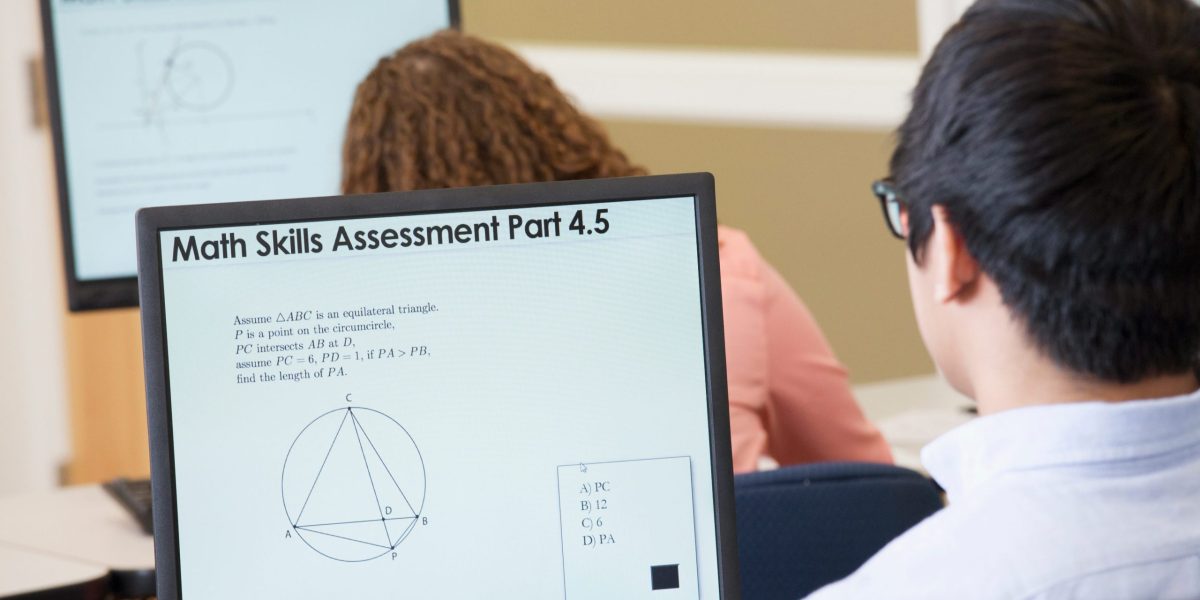
AI is letting students out of the math homework grind – but at a steep price.
The latest research suggests that the increased availability of AI tools is not only enabling students to solve math problems faster, but also eroding their fundamental understanding of mathematical concepts. In a recent study, researchers coined the term “cognitive surrender” to describe this phenomenon, where students rely heavily on AI to do the thinking for them.
According to the study, when students use AI to solve math problems, they become less likely to engage with the underlying math concepts. Instead, they rely on the AI tool to provide the answers, often without understanding the reasoning behind them. This, in turn, can lead to a decline in math skills and a decreased ability to tackle word problems on their own.
The study, which analyzed student responses to math word problems, found that those who used AI tools scored lower on the problems than their peers who didn’t use them. The difference was not just small; students who used AI tools scored an average of 16% lower on the test.
Why math skills matter
While math skills might seem like a small part of a well-rounded education, they are essential for problem-solving, critical thinking, and reasoning. Math skills are also a key indicator of future career success, with many STEM fields (science, technology, engineering, and mathematics) requiring strong math skills.
So, what does this mean for parents, educators, and policymakers? It means that we need to rethink how we teach math and ensure that students are developing the skills they need to succeed in the long term.
Back to basics?
While AI tools may be able to solve math problems quickly and accurately, they cannot replace human understanding and intuition. To combat the cognitive surrender phenomenon, educators are turning back to a more traditional approach to math education, emphasizing problem-solving, critical thinking, and reasoning over relying on AI tools.
This shift back to basics may require some creative thinking from educators, but it’s essential to ensure that students develop the math skills they need to succeed in an increasingly complex world.
What this means for parents is that it’s more important than ever to encourage your child to develop problem-solving skills, even when it’s easier to rely on AI tools. By taking a more hands-on approach to math education, we can help our children build a strong foundation in math that will serve them well throughout their lives.