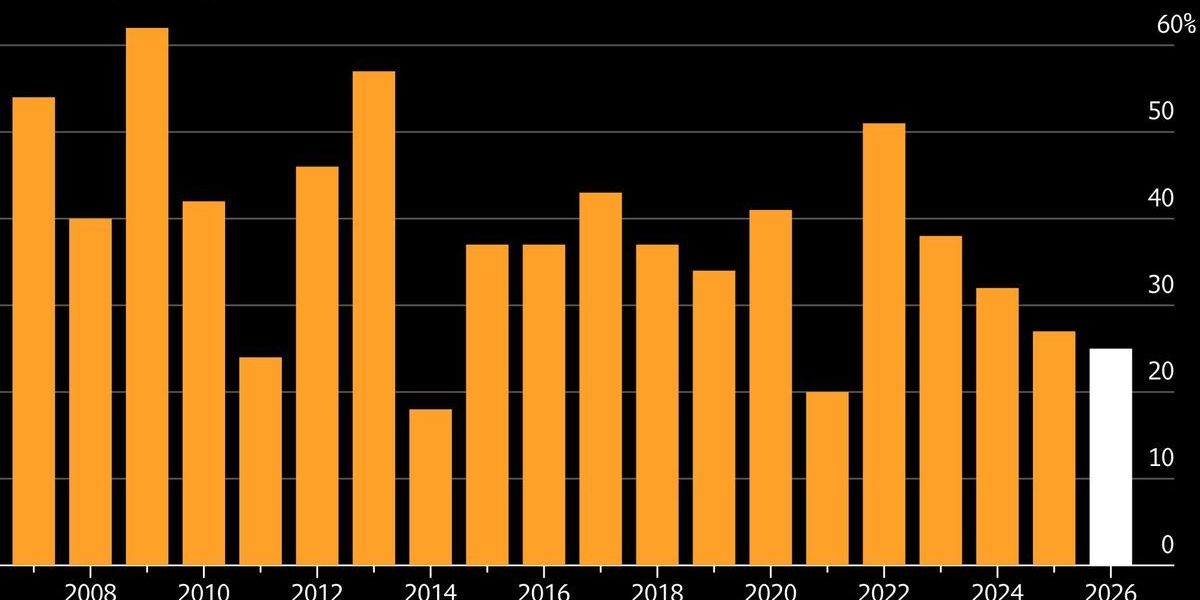
**AI’s Grip on Wall Street Tightens, Leaving Active Managers in a Bind**
Active managers on Wall Street are struggling to keep up with the rapid growth of artificial intelligence (AI) in the financial markets. According to a recent report by Bloomberg, AI-powered trading platforms are increasingly dominating the market, leaving human managers in a difficult position.
The report highlights that AI-driven trading systems now account for nearly 30% of overall trading volume in the US, up from just 10% in 2018. This surge in AI adoption has forced active managers to rethink their strategies and consider integrating AI-powered tools into their portfolios.
**The Rise of AI-Powered Trading**
The AI boom is being driven by the increasing availability of cheap computing power and access to vast amounts of market data. This has enabled the development of sophisticated AI algorithms that can quickly analyze market trends and make precise trades. The likes of Goldman Sachs and UBS are among the many financial institutions investing heavily in AI development, with some estimates suggesting that AI will account for up to 70% of trading volume by 2025.
However, the rise of AI-powered trading has also thrown up concerns about market manipulation and the potential for AI systems to perpetuate market distortions. Regulators are under pressure to ensure that these systems are transparent and fair, but the complexity of AI algorithms makes it difficult to pinpoint any issues.
**What this means**
For active managers, the shift towards AI-powered trading raises questions about their role in the market. As AI becomes increasingly dominant, will human managers be redundant? The answer lies in adaptability – active managers will need to integrate AI-powered tools into their portfolios in order to remain competitive. By embracing AI, managers can leverage its capabilities to make more informed decisions and improve their overall performance.
**A Changing Landscape**
The AI boom is not just a threat to active managers, but also to the broader financial ecosystem. As AI becomes more pervasive, it’s likely to lead to a significant reduction in human trading roles and potentially even the emergence of new forms of market manipulation. The implications are far-reaching, and only time will tell how the market responds to this seismic shift.