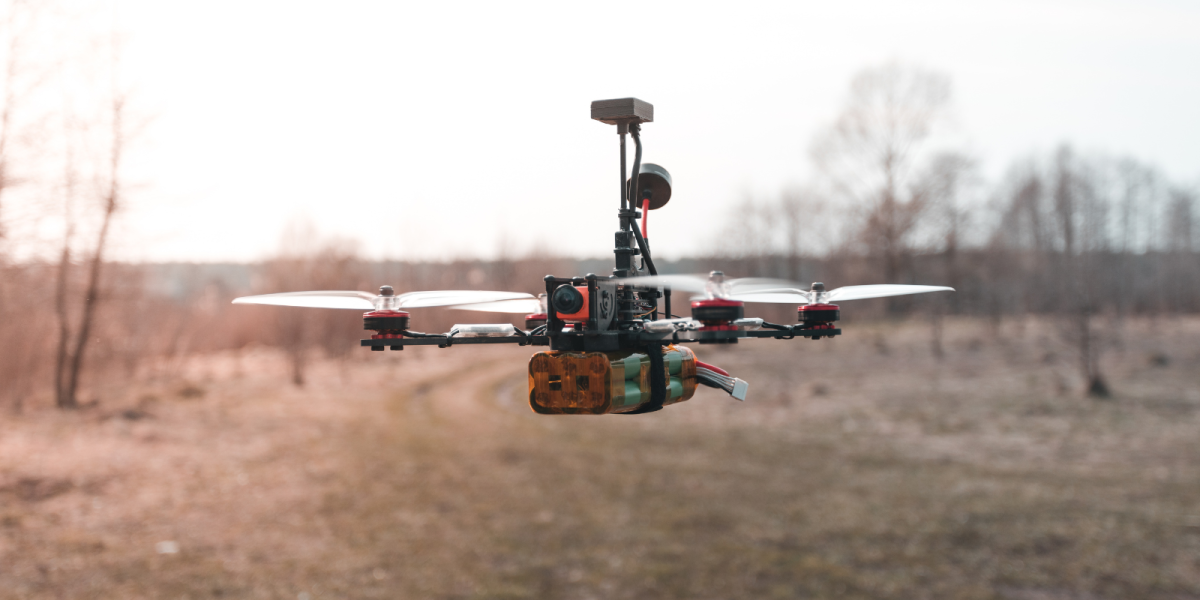
Russia’s invasion of Ukraine has become the world’s largest live experiment in autonomous drone warfare, forcing both sides to adapt and rewrite military doctrines
When Russia launched its full-scale invasion of Ukraine in February 2022, military planners on both sides were operating on doctrines built for a different kind of war. The traditional understanding of modern combat emphasized the importance of precision-guided munitions, electronic warfare, and air superiority. However, the conflict in Ukraine has revealed that autonomous drones have become the decisive factor in modern warfare.
Autonomous Drones Prove Pivotal in Ukraine
On the Ukrainian side, the military has heavily relied on Turkish-made Bayraktar TB2 drones, which have proven instrumental in targeting Russian armor and logistics. These drones are capable of carrying precision-guided munitions, providing real-time intelligence, and even serving as flying sentries to detect and neutralize incoming enemy fire. The successful deployment of these drones has forced Russian military planners to reassess their own approach to air warfare.
Russia’s Response: A Drone-Heavy Counter-Offensive
Conversely, Russia has responded to Ukraine’s drone-based strategy by heavily investing in its own drone capabilities. Moscow has developed a range of domestic drones, including the Orlan-10, which are designed to provide battlefield reconnaissance and conduct close-air support missions. Furthermore, Russia has also started to explore the use of swarms of drones to overwhelm Ukrainian air defenses.
Global Implications: A New Era of Autonomous Warfare
The lessons learned in Ukraine are having far-reaching implications for militaries worldwide. As drones become increasingly sophisticated and accessible, traditional notions of air superiority and precision-guided munitions are being reevaluated. What this means for future conflicts is that ground commanders will need to develop strategies that account for an omnipresent drone threat.
What this means: Military planners will need to invest in counter-drone capabilities, such as electronic warfare systems and low-altitude air defense systems, to mitigate the threat posed by autonomous drones. This shift in doctrine will require significant changes to training, tactics, and logistics, as militaries adapt to a new era of autonomous warfare.