Iran’s Oil Flow Test: Backing Up Threats Isn’t Working
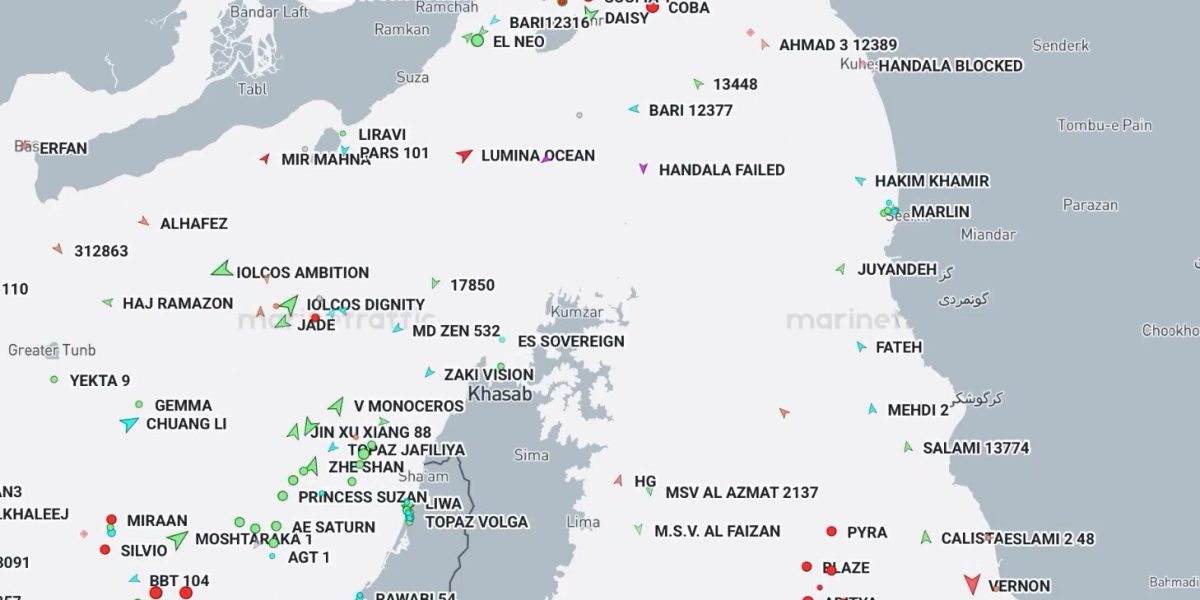
Oil flows through the Strait of Hormuz, a critical waterway connecting the Persian Gulf to the Gulf of Oman, have surged to an 85% capacity, defying Iran’s previous threats to block the passage. Just last month, the flow rate was barely 15-20% of its typical capacity, with Iran’s opposition causing a significant reduction in oil shipments.
However, yesterday’s dramatic turnaround sees the flow rate reaching 17 million barrels per day (mbpd), which accounts for an astonishing 85% of the strait’s normal capacity of 20 mbpd.
The Calculated Risk
The fact that Iranian-backed factions had previously managed to restrict oil flows by 80% suggests that the ships’ willingness to continue sailing through the strait, despite the threats, was a calculated risk.
What’s Behind the Change in Tactics?
It’s likely that the international community, including oil majors and traders, have concluded that Iran’s threats are not a reliable means of gaining leverage. With the flow rate now back to more than 80% of its normal capacity, it appears that Iran’s strategy of using intimidation to restrict oil shipments has been rendered ineffective.
A Practical Lesson
This situation offers a practical lesson in the power dynamics at play in the global oil market. With Iran’s economy severely impacted by international sanctions, it’s possible that the country is running out of effective ways to exert influence over the global economy. As the flow rate continues to rise, it’s likely that Iran will need to find new and more effective ways to assert its influence.
For now, the Strait of Hormuz remains a vital artery supplying oil to key markets, and the ability of oil tankers to navigate this critical waterway without restriction is a clear indication of Iran’s reduced capacity to disrupt global energy supplies.
Next Steps
The question now is how long Iran’s leadership will continue to pursue a strategy that has clearly failed. As the situation continues to unfold, one thing is certain: the stakes remain high, and the outcome will have far-reaching implications for global energy markets and geopolitics.