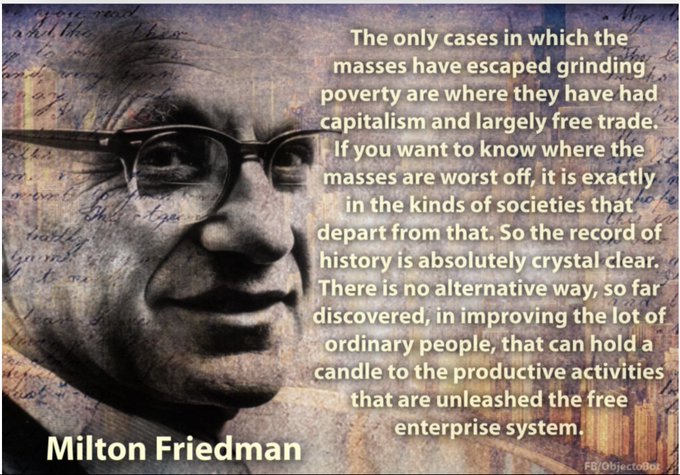
Thus spoke Milton Friedman:“In the only cases in which the masses have escaped from grinding poverty are where they have had capitalism and largely free trade. If you want to know where the masses are worst off, it’s exactly in the kinds of societies that deliberately decide or try to abolish capitalism and free trade.”
The debate over capitalism’s role in society has been ongoing for decades, with some arguing that it’s the engine of progress and poverty reduction, while others claim it’s the source of inequality and environmental degradation. As a tech journalist covering AI, it’s essential to consider how this fundamental economic system might influence the development and impact of artificial intelligence.
Capitalism and AI: A Complex Relationship
The intersection of capitalism and AI is multifaceted. On one hand, capitalist systems often rely on innovation and entrepreneurship to drive growth. AI, with its potential to automate tasks, enhance productivity, and create new industries, can be a powerful tool for capitalists to increase efficiency and profits. Companies like Google and Amazon have already leveraged AI to disrupt markets and create new business models.
However, the same capitalist systems that drive innovation can also exacerbate inequality and environmental degradation. The pursuit of profit often leads to the exploitation of resources and labor, which can have devastating consequences for the planet and its inhabitants. If left unchecked, AI could potentially worsen these issues by automating jobs and increasing the efficiency of existing systems, further concentrating wealth and power in the hands of a few.
The AI-Driven Labor Market
The labor market is likely to be one of the most significant areas affected by the intersection of capitalism and AI. As automation increases, jobs that were previously thought to be safe from AI-driven displacement may become vulnerable. This has significant implications for workers, who may find themselves facing unemployment or underemployment due to the automation of their roles.
What this means: As AI becomes increasingly integrated into the economy, it’s essential for workers and policymakers to consider the potential consequences for the labor market. This might involve investing in education and retraining programs to help workers adapt to the changing job market or implementing policies that mitigate the negative impacts of automation on workers and communities.
A New Social Contract
The relationship between capitalism and AI also raises questions about the need for a new social contract. As machines take on more responsibilities and humans are displaced from the workforce, societal norms and expectations may need to be reevaluated. This might involve a shift towards a post-scarcity economy, where the focus is on providing for everyone’s basic needs rather than perpetuating growth and profit at any cost.
While the intersection of capitalism and AI is complex and multifaceted, one thing is clear: the future of work, the economy, and society itself hangs in the balance. By understanding the potential consequences of this combination, we can work towards creating a more equitable and sustainable future for all.