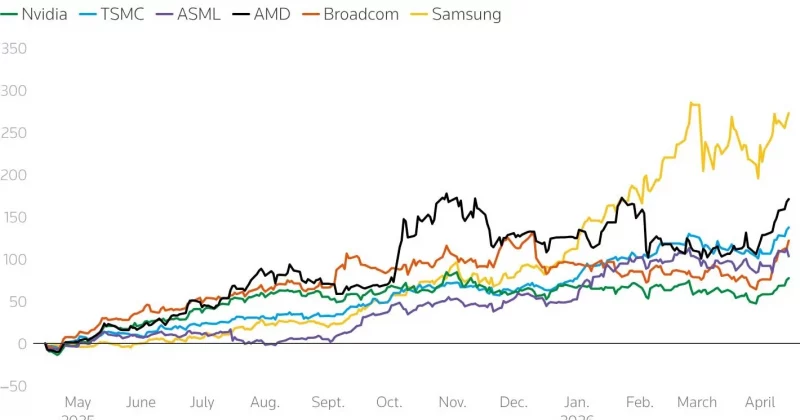
South Korean tech giant Samsung and Taiwan Semiconductor Manufacturing Company (TSMC) are driving a massive AI-driven stock boom in their respective countries.
Korea’s Market Dominance
The surge is largely due to the increasing demand for AI-powered technologies, which requires high-performance computing and specialized chips. As a result, Samsung and its peers have seen their stock prices skyrocket, with the KOSDAQ index – a key benchmark for South Korean companies – heavily weighted with semiconductor stocks.
According to recent data, Samsung Electronics accounts for a staggering 25% of the KOSDAQ’s market capitalization, while TSMC sits at 21% of Taiwan’s TAIEX index. This level of concentration raises concerns about market volatility and the risks associated with a decline in demand for AI-related products.
Making Them High-Risk Bets
Experts warn that the economies of both countries are now heavily reliant on the semiconductor industry, making them vulnerable to external shocks. “The concentration of semiconductor stocks in these indexes makes them essentially leveraged bets on artificial intelligence,” says Tom Lee, founder of Fundstrat Global Advisors.
This phenomenon is not unique to Korea and Taiwan. In the United States, Apple’s dominance of the Nasdaq Composite index – 40% in 2021 – has raised similar concerns about market concentration and risk.
What This Means
The AI-driven stock boom is a double-edged sword for investors. On one hand, it presents opportunities for growth and returns on investment. On the other hand, it highlights the risks of market concentration and the potential for significant losses if demand for AI-related products declines. As the AI market continues to evolve, investors would do well to keep a close eye on these dynamics and adjust their strategies accordingly.