A New Tool for Neuroscientists: Light-Activated Tetanus Neurotoxin Could Revolutionize Brain Research
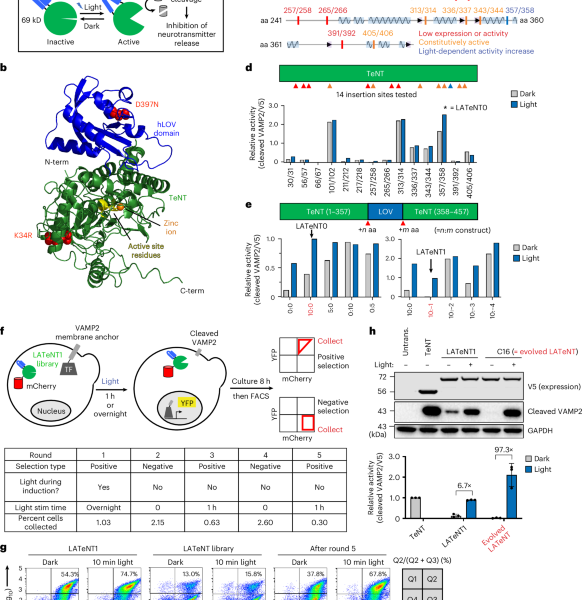
Researchers have created a light-activated form of tetanus neurotoxin, dubbed LATeNT, which can be used to inhibit exocytosis in neurons and other cells with unprecedented precision. This breakthrough could revolutionize the field of neuroscience by allowing scientists to study the brain in a way that was previously impossible.
Currently, neuroscientists rely on invasive methods to study the brain, often causing unintended damage or disrupting normal neural activity. LATeNT changes the game by providing a non-invasive way to selectively inhibit neural transmission or abolish insulin secretion in pancreatic beta cells. This means researchers can study the brain in a more controlled and precise manner.
The LATeNT construct was created by cloning gene fragments using Twist Biosciences and subcloning them into a pcDNA3 backbone. The researchers were able to achieve spatiotemporally precise inhibition of exocytosis using a light-activated trigger. This is a significant improvement over previous methods, which relied on systemic administration or irreversible inhibitors.
What This Means for Brain Research
The implications of LATeNT are far-reaching, with potential applications in the study of neurological disorders such as epilepsy, Parkinson’s disease, and Alzheimer’s disease. By allowing researchers to selectively inhibit neural transmission, LATeNT could provide valuable insights into the underlying mechanisms of these conditions.
Furthermore, LATeNT could be used to study the neural circuits involved in learning and memory, potentially leading to the development of new treatments for neurological disorders. While the technology is still in its early stages, it has the potential to revolutionize the field of neuroscience and provide new insights into the workings of the human brain.
A Bright Future for Neuroscience
The development of LATeNT represents a significant milestone in the quest to understand the brain. By providing a non-invasive and precise way to study neural activity, LATeNT could unlock new doors to understanding the complexities of the human brain. As researchers continue to develop and refine this technology, we can expect to see significant advances in our understanding of neurological disorders and the development of new treatments.