Agentic AI Takes Flight in American Manufacturing
A looming engineering shortage threatens to upend America’s manufacturing landscape, but a new approach to artificial intelligence might be just the solution: Agentic AI. By augmenting human expertise with AI-driven efficiency, manufacturers are poised to regain a competitive edge and bring work back home.
The numbers are stark: 3.3 million engineering jobs are projected to go unfilled by 2028, according to the National Science Foundation. Manufacturers are facing a perfect storm of talent scarcity, production pressures, and global competition. But what if they could automate the mundane and amplify human ingenuity instead of replacing it?
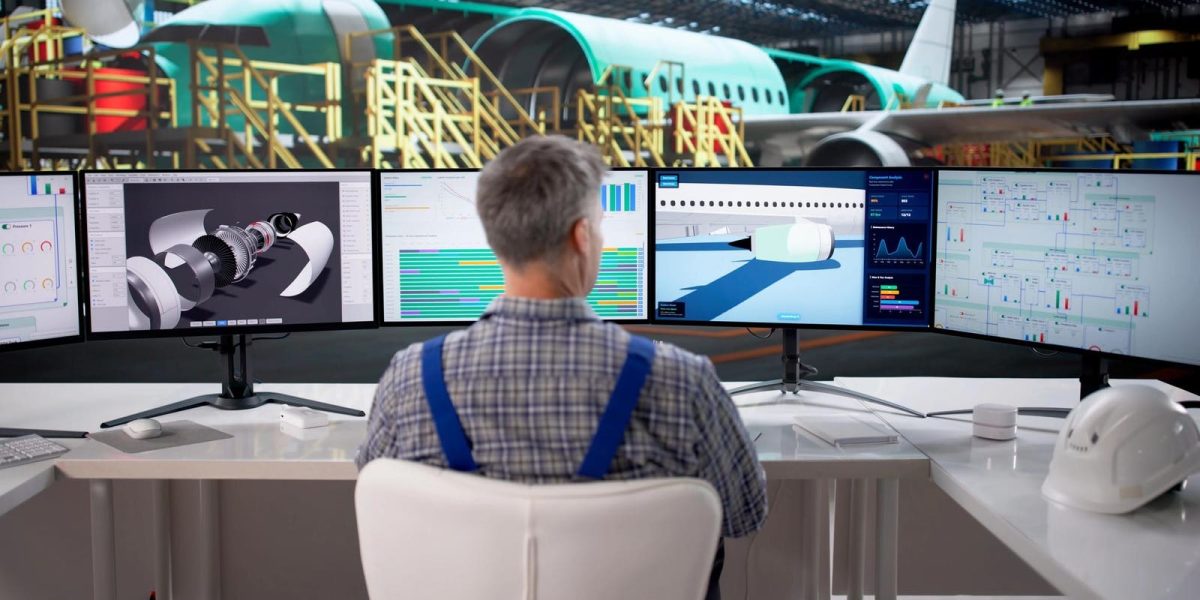
Agentic AI flips the script on traditional AI systems, which are typically designed to perform specific tasks in isolation. By contrast, Agentic AI is built to collaborate with humans, learning from their strengths and adapting to their workflows. Imagine an aviation supplier using Agentic AI to design and optimize aircraft components, freeing up human engineers to focus on high-stakes innovation and problem-solving.
From Efficiency to Innovation
What this means in practical terms is that manufacturers can boost productivity by 20-30% while keeping human expertise at the helm. By automating routine tasks and augmenting human decision-making, Agentic AI can help bridge the engineering talent gap and reduce production costs. This, in turn, can strengthen competitiveness in a global market and create new opportunities for American manufacturers.
The potential benefits are far-reaching. As manufacturers become more agile and efficient, they’ll be better equipped to innovate and adapt to changing consumer demands. And with human engineers working alongside AI systems, the boundaries between human and machine expertise will blur, yielding new insights and creative solutions.
A New Era for American Manufacturing
The prospects for Agentic AI in American manufacturing are promising, but the transition won’t be seamless. Manufacturers will need to invest in training and re-skilling their workforce to work effectively with AI systems. They’ll also need to navigate complex questions around data ownership, transparency, and accountability.
Still, the rewards could be substantial. By harnessing the power of Agentic AI, American manufacturers can reclaim their competitive edge, create new jobs, and build a more resilient and innovative economy. As the engineering shortage takes center stage, Agentic AI offers a beacon of hope for a brighter future in American manufacturing.