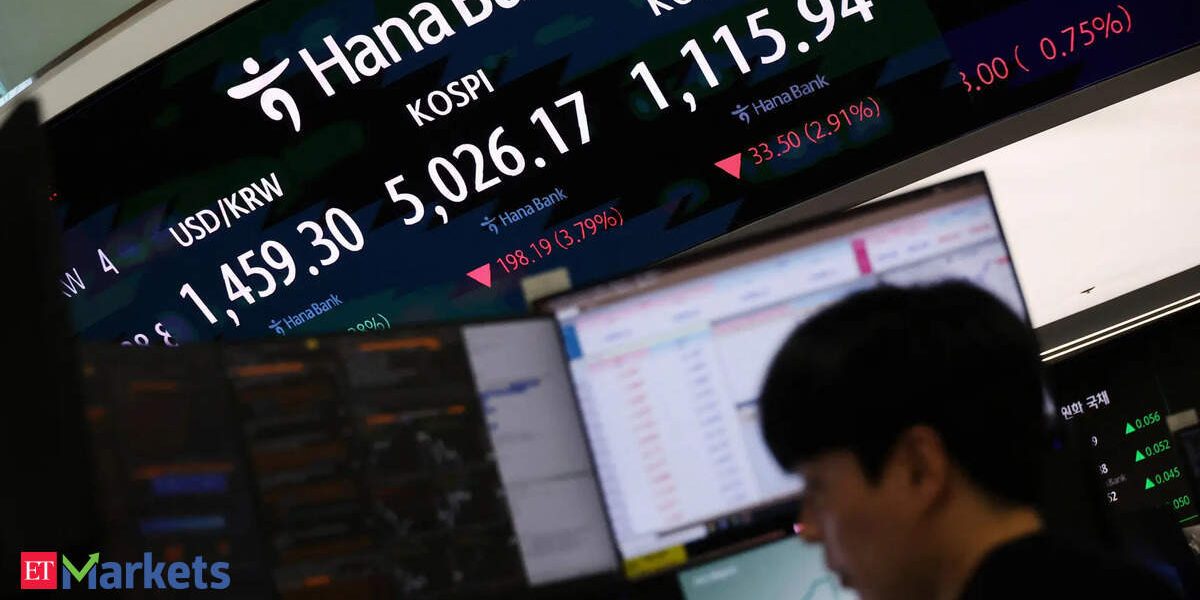
South Korea’s Kospi plunged 8.1% in a single day, wiping out nearly $100 billion in market value, as tech investors scrambled to adjust to a changing landscape.
**AI-driven trading: A wild card in global markets**
The US and Iran’s apparent de-escalation of tensions had sparked hopes of a global economic turnaround, but South Korean stocks bucked the trend on Tuesday. The benchmark Kospi index dropped 551 points to 6,250.5, while the tech-heavy Kosdaq index plummeted 11.4%. The sharp decline led to “sidecar” trading curbs on both indices, halting programme trading.
The sell-off in South Korean stocks was largely driven by a global rout in chipmakers. Industry leaders like SK Hynix, Samsung Electronics, and Micron Technology plummeted, with shares in SK Hynix falling 8.7% to a two-year low. Rising competition from China and declining demand for memory chips weighed heavily on the market.
**The role of AI in exacerbating market volatility**
AI-driven trading strategies have become increasingly prevalent in recent years, but they can also exacerbate market volatility. High-frequency trading algorithms can rapidly buy and sell shares in response to market fluctuations, amplifying price movements. This can create a self-reinforcing feedback loop, where AI-driven trades contribute to market volatility, which in turn drives more buying and selling.
**What this means for investors**
The sharp decline in South Korean stocks is a stark reminder of the risks associated with AI-driven trading. Investors should be cautious of trading strategies that rely heavily on AI algorithms, as they can quickly turn against them in times of market uncertainty. A diversified investment portfolio and a clear understanding of market trends can help mitigate the risks associated with AI-driven trading.
**The future of AI in finance: A mixed bag**
South Korea’s Kospi decline is also a reflection of the broader challenges facing the global economy. While AI has the potential to drive efficiency and innovation in finance, it also introduces new risks and uncertainties. As AI becomes increasingly integrated into the financial sector, investors and policymakers will need to navigate the complexities of AI-driven trading and its impact on market stability.