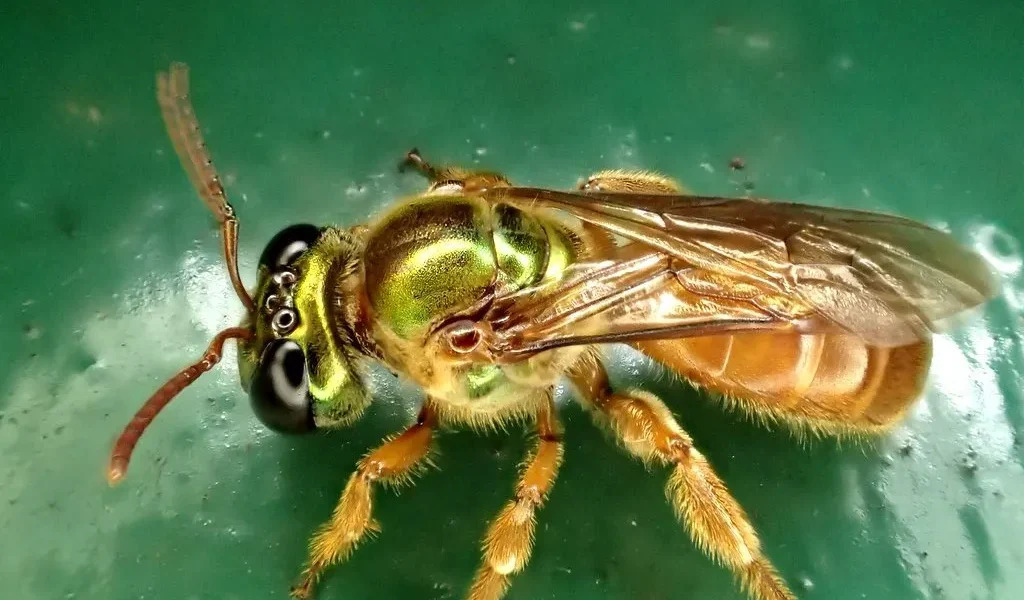
The sweat bee species Megalopta genalis has a surprisingly complex social structure, with daughters making a life-changing decision: some leave home to start their own colonies, while others stay to help their mom.
The Bee with the Big Decision
Biologists at the Smithsonian Tropical Research Institute have been investigating this unusual behavior in the Megalopta genalis, a species of sweat bee native to Central and South America. Led by Carmelo Lopez, the team discovered that the decision to leave or stay is influenced by factors such as the availability of food, the quality of the nest, and even the bee’s own genetic makeup.
When a Megalopta genalis queen bee gives birth to a new generation, some of her daughters will stay behind to help her manage the existing colony. These helper bees take on crucial tasks like foraging, caring for young, and defending the nest. Meanwhile, other daughters will leave to establish their own colonies, a process made possible by their mother’s generosity – she lays extra eggs specifically for her leaving daughters.
Evolutionary Insights
The team’s findings offer a fascinating window into the evolution of social organization in insects. By studying this unique species, scientists can gain insights into the pressures and constraints that drove the development of more complex social structures in other insects, like honeybees and ants.
The research highlights the importance of cooperation and altruism in the evolution of social behavior. In the case of Megalopta genalis, the helper bees’ decision to stay and assist their mother increases the colony’s chances of survival and success, ultimately benefiting their siblings and even their mother.
What this means
This study may seem like a curiosity, but it has broader implications for our understanding of social evolution. As we continue to explore the intricacies of insect social behavior, we may uncover more surprising strategies for cooperation and adaptation – and who knows, maybe even hints for human society too.