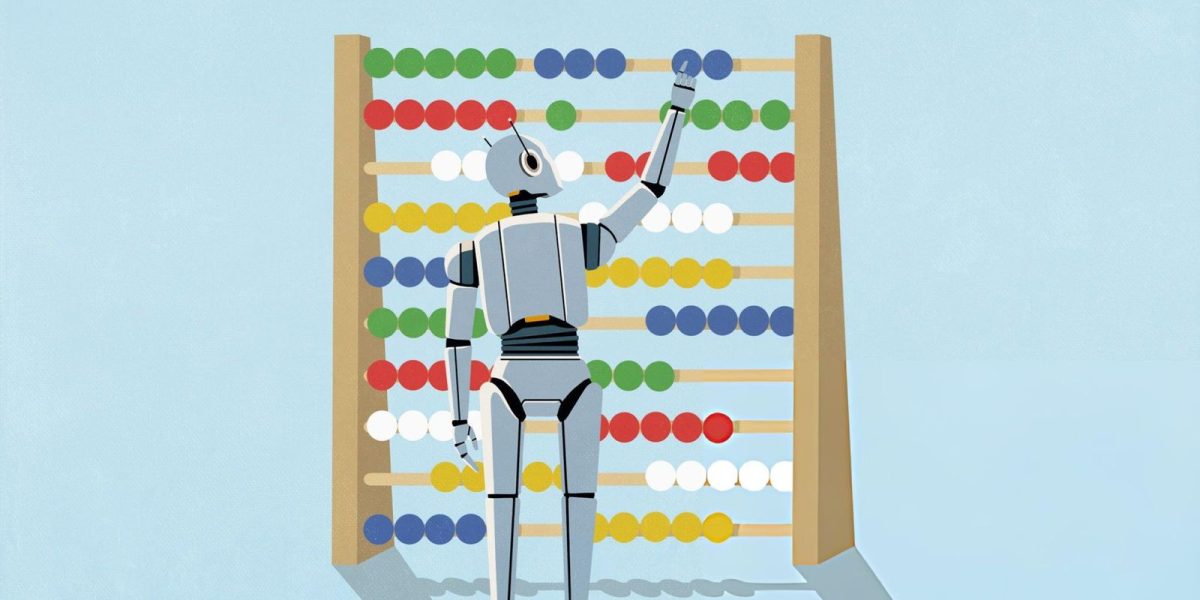
Mathematicians Stunned as AI Model Cracks Decades-Old Puzzle
A renowned mathematician has reportedly used an AI model from Anthropic to find a counterexample to the Jacobian conjecture, a problem that has baffled experts for over 60 years. This breakthrough marks a significant milestone in the field, raising questions about the role of AI in mathematical research and its potential implications for the future.
The Jacobian conjecture, proposed by Wolfgang Krull in 1938, states that any polynomial map from a polynomial ring to another must be injective, meaning it maps distinct elements to distinct images. The problem, considered one of the most significant unsolved problems in algebra, has been a long-standing challenge for mathematicians, with many attempting to prove or disprove it.
AI’s Unexpected Contribution
Anthropic’s AI model, a variant of its Explorer model, was instrumental in finding a counterexample to the conjecture. The model leveraged its ability to generate and test vast numbers of mathematical expressions, ultimately discovering a counterexample that had eluded human mathematicians for so long.
“The AI was able to explore a vast solution space in a very short amount of time,” said the mathematician, who wished to remain anonymous. “It’s a testament to the power of machine learning and the potential for AI to make significant contributions to mathematical research.”
Implications for Mathematical Research
This breakthrough has sparked debate among mathematicians about the future of their field. While some see AI as a valuable tool for augmenting human research, others worry about the potential displacement of human mathematicians.
What this means is that researchers will need to adapt and learn to work alongside AI models, using their unique strengths to complement human ingenuity. As AI continues to advance, it’s likely that mathematicians will rely increasingly on machine learning tools to explore and solve complex problems.