Scientists crack code on quantum energy transfer
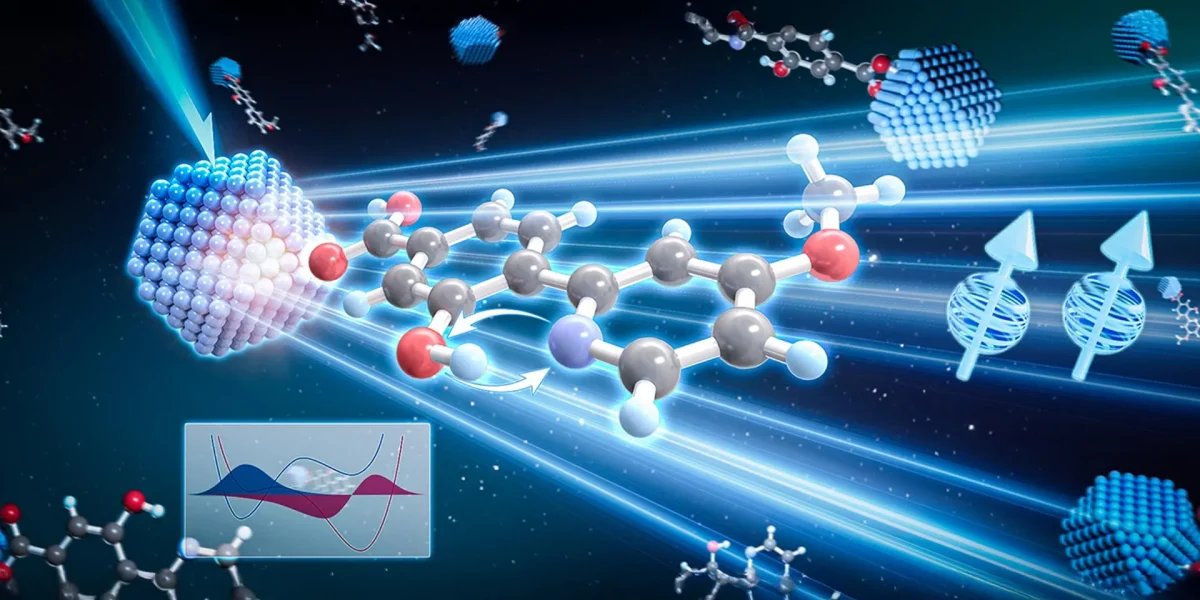
A bizarre phenomenon in quantum physics has been harnessed by researchers to significantly enhance the transfer of energy between tiny particles called quantum dots and their surroundings. This breakthrough, achieved through a proton-assisted mechanism, could have far-reaching implications for fields like medicine and electronics.
Protons, positively charged particles found in the nucleus of atoms, have long been known to play a supporting role in chemical reactions. But in this case, they’ve taken center stage as the key to unlocking efficient energy transfer between quantum dots and nearby molecules.
The proton-assisted mechanism works by briefly shifting the proton’s position, allowing it to facilitate coordinated electron movement between the quantum dots and surrounding molecules. This coordinated dance, known as triplet energy transfer, is then enabled by the proton’s return to its original position.
Triplet energy transfer is a crucial process in both living systems and engineered materials. One familiar example is proton-coupled electron transfer (PCET), a process that plays a central role in various biological reactions and chemical synthesis.
What this means
This discovery could lead to the development of more efficient energy-harvesting systems, particularly in the field of solar cells. By optimizing energy transfer between quantum dots and their surroundings, researchers may be able to create more effective solar panels that can harness energy from sunlight more efficiently.
The quantum connection
The proton-assisted mechanism relies on quantum principles to facilitate coordinated electron movement between quantum dots and surrounding molecules. This phenomenon highlights the intricate connection between proton and electron motion in both living systems and engineered materials.
Future applications
The implications of this breakthrough extend beyond energy transfer and solar cells. Researchers may also explore the application of this mechanism in medicine, where efficient energy transfer can play a crucial role in various biological processes and chemical reactions.