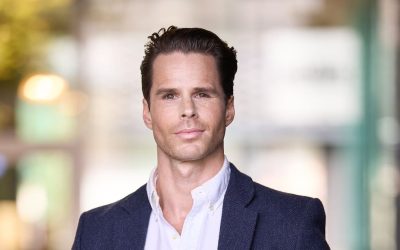
Levant Alpöge, a former Harvard valedictorian and member of the AI research lab Anthropic, has used their AI model Claude’s Fable 5 to crack a century-old math problem that has left mathematicians scratching their heads since 1939.
A Problem in the Making
It’s the kind of problem that can stump even the brightest minds, and on Sunday afternoon – while the rest of the world was glued to the World Cup final – Alpöge’s AI model resolved it with ease. By the time Kevin Buzzard, a mathematician at Imperial College London, woke up, the problem had already been solved.
The problem in question is part of a category called the “Birch and Swinnerton-Dyer Conjecture,” named after the two mathematicians who first proposed it in 1965. It’s a brain-twister that deals with complex numbers and the geometry of elliptic curves. To put it simply, the conjecture tries to predict the behavior of these curves as they twist and turn through space.
What This Means
So, what does this mean for mathematicians and the wider public? Well, for one, it means that the boundaries between human and machine problem-solving capabilities are blurring at an increasingly rapid pace. In the past, mathematicians relied on human intuition, creativity, and perseverance to crack tough problems. Now, with the help of AI models like Claude’s Fable 5, those boundaries are being pushed further and further.
The implications of this change are unsettling, to say the least. As Levant Alpöge puts it, “This is a very rapid and very unsettling change” that mathematicians are struggling to keep up with. The question is, where will this change lead us next? Will we see more AI-driven breakthroughs in the worlds of math and science, or will we hit a roadblock that we can’t overcome?
A New Era of Math?
As mathematicians grapple with these questions, it’s clear that we’re entering a new era of math, one where human ingenuity and machine intelligence are merging in ways that were previously unimaginable. The world of math will never be the same again, and we can only wonder what the next century will hold.