Kimi K3’s AI Breakthroughs: What You Need to Know
**Kimi K3’s AI Breakthroughs: What You Need to Know**
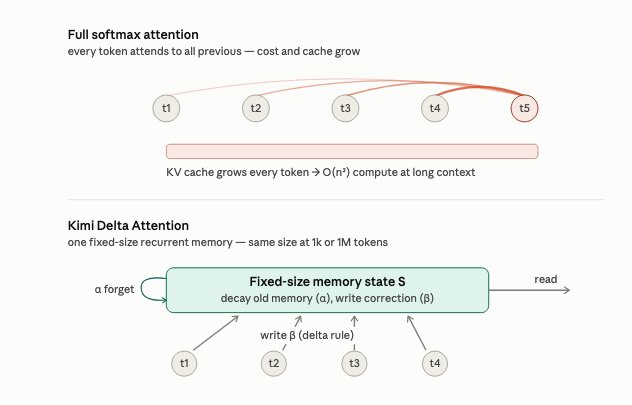
The latest advancements by Kimi K3, a company at the forefront of natural language processing, have sent shockwaves through the AI community. Two technical improvements, Kimi Delta Attention and Attention Residuals, aim to drastically enhance the speed and efficiency of AI models.
**Decoding Speed: Kimi Delta Attention**
Kimi K3’s first innovation is a hybrid linear-attention mechanism called Kimi Delta Attention. This technology boasts an astonishing 6x faster decoding speed at long contexts, which refers to the ability of AI models to process complex sentences and relationships. To put this into perspective, consider a conversation between two people: one person mentions a specific event, and the other person responds with a nuanced comment that requires understanding the context of the original statement. Kimi Delta Attention enables AI models to grasp this context more efficiently, making interactions feel more natural and intelligent.
**Streamlined Residual Connections: Attention Residuals**
The second development, Attention Residuals, is a drop-in replacement for standard residual connections in AI models. This innovation promises to simplify the processing of attention mechanisms, which are a crucial component of AI models, often referred to as the “brain” of the system. Attention Residuals eliminates the need for unnecessary computations, reducing memory usage and allowing AI models to scale to more complex tasks without sacrificing performance.
**What this means**
For developers, these advancements mean significant speedups and reduced memory usage, making it easier to build and deploy AI models in a variety of applications, from language translation and text summarization to chatbots and virtual assistants. For users, this translates to more efficient and responsive AI experiences, which can lead to improved productivity and a more seamless interaction with AI-powered systems.