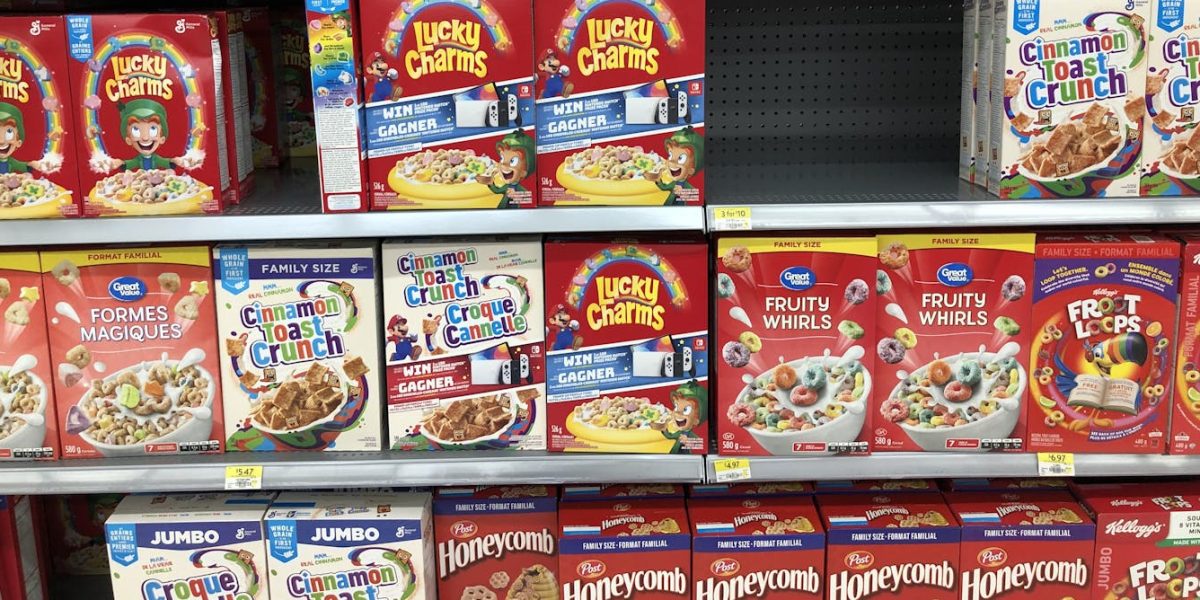
Cereal mascots like Tony the Tiger and Sonny the Cuckoo Bird have been convincing kids to start their day with a sweet and crunchy breakfast for decades.
But new research shows that the majority of children’s cereals are still high in sugar, despite promises of fun and nutrition.
Government Guidelines Undermined
Using government-developed criteria for marketing to kids, none of the child-targeted cereals examined in a recent study would be permitted to be advertised to children, and 96% surpassed sugar thresholds.
The study suggests that the marketing efforts of popular cereal brands are misaligned with the actual nutritional value of their products.
The guidelines, established by the International Chamber of Commerce and the World Federation of Advertising, are designed to protect children from advertising that promotes unhealthy products.
Cereal Sugar Content
The average bowl of cereal for kids in the US contains around 11 grams of added sugar, the equivalent of almost 3 teaspoons.
For comparison, the American Heart Association recommends that children aged 2-18 consume no more than 25 grams of added sugar per day.
Many popular children’s cereals contain significantly more sugar, with some brands offering versions with up to 14 grams of added sugar per serving.
What This Means
The findings of the study suggest that parents need to be more vigilant when selecting cereals for their kids, and that manufacturers need to take a closer look at the nutritional value of their products.
By choosing healthier options or making homemade breakfast choices, parents can help their kids start the day with a more nutritious breakfast.
As one researcher noted, “The marketing of unhealthy foods to children is a major public health concern, and it’s time for manufacturers to take action to make their products more aligned with the health needs of kids.”