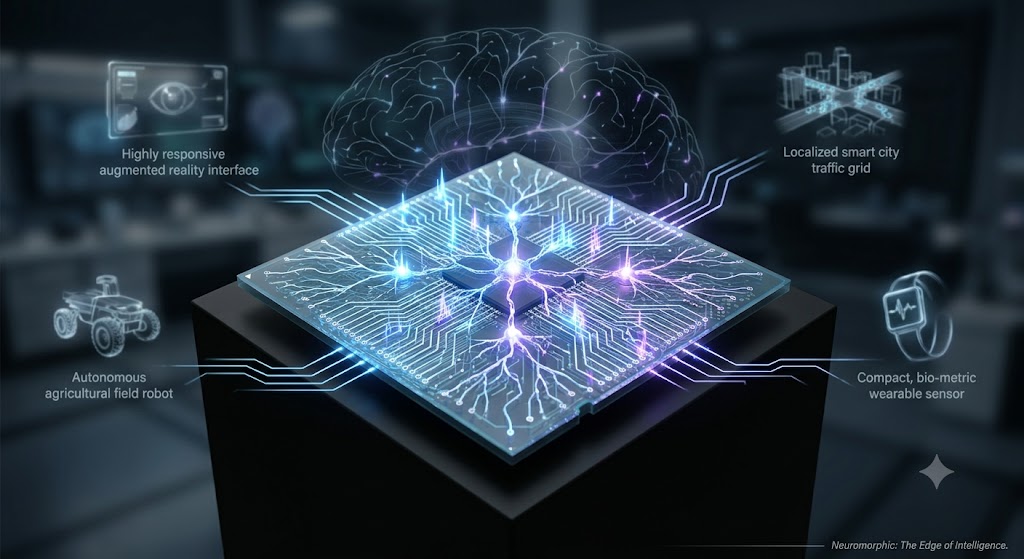
Neuromorphic engineering, the practice of designing AI systems that mimic the brain’s structure and function, is poised to revolutionize the way we innovate – by making our creations more human-friendly and intuitive.
A Brain-Inspired Breakthrough
Moore’s Law may be slowing down, but advancements in neuromorphic engineering are picking up speed. This field focuses on developing AI that doesn’t rely on traditional, rule-based programming. Instead, neuromorphic systems learn and adapt through complex, organic interactions, much like our own brains.
The concept has far-reaching implications for industries like healthcare, autonomous vehicles, and robotics, where AI is integral to decision-making and problem-solving. By emulating the brain’s neural networks, these systems can become more efficient, flexible, and responsive to changing environments.
Less Rigid, More Human
The current AI landscape is often characterized by rigid, one-size-fits-all solutions. These systems are optimized for specific tasks but tend to break down when faced with novel situations or unexpected inputs. In contrast, neuromorphic AI can handle ambiguity and uncertainty with greater ease, making it a more suitable choice for complex, real-world challenges.
For instance, imagine a self-driving car navigating through a dense, unfamiliar city. Traditional AI systems might struggle to adapt to unexpected road closures or pedestrians. Neuromorphic AI, on the other hand, could adjust its “thinking” on the fly, leveraging its ability to learn from experience and context.
What this means
Neuromorphic engineering has the potential to humanize the future of innovation by making AI systems more intuitive, flexible, and adaptable. As this technology advances, we can expect to see more applications in areas where human-like intelligence is essential, such as healthcare, education, and social interaction.
While we’re still in the early stages of this revolution, one thing is clear: the future of innovation will be more organic, more dynamic, and more human-friendly – just like the brain-inspired breakthroughs that are driving it forward.