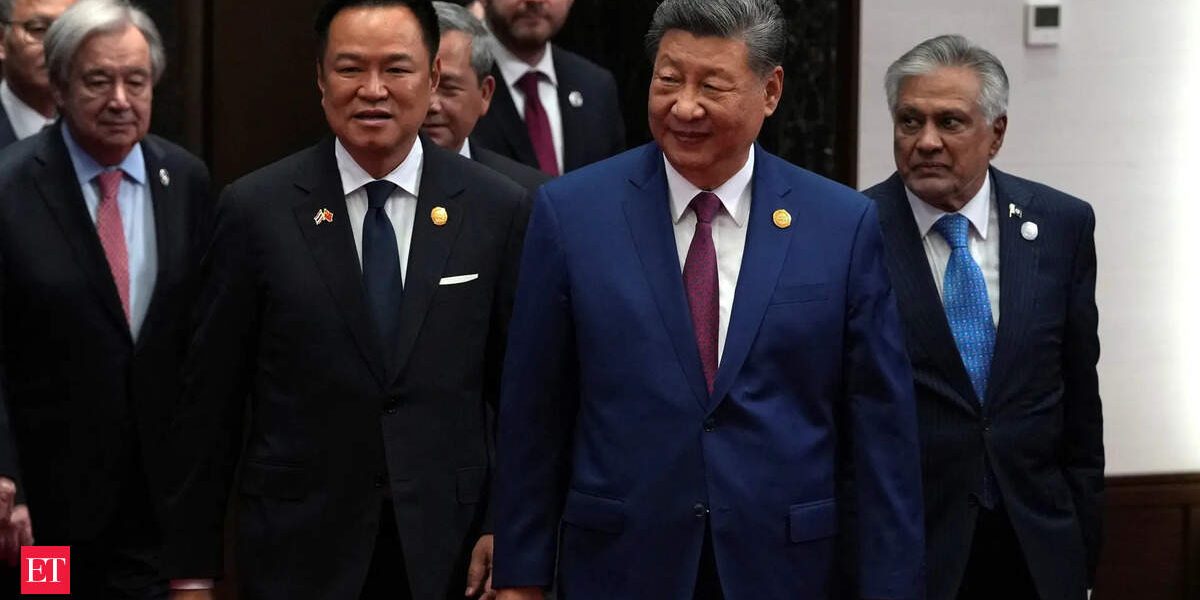
At the World Artificial Intelligence Conference in Shanghai, President Xi Jinping laid out China’s vision for an inclusive AI revolution.
A New Standard for Global AI Access
Xi Jinping emphasized the importance of prioritizing people over profits in AI development, and committing to equitable access to AI technologies for developing nations. This move comes at a time when the world is grappling with the benefits and challenges of AI adoption.
According to Xi, China aims to prevent the perpetuation of historical injustices in the AI era by making AI accessible to all nations. He emphasized that this approach aligns with China’s values of equality and mutual benefit.
China’s stance on AI is significant, as the country has emerged as a leading player in the global AI landscape. Chinese companies like Baidu, Alibaba, and Tencent are investing heavily in AI research and development, and are driving innovation in areas like natural language processing, computer vision, and robotics.
The Global Impact
China’s commitment to equitable AI access has significant implications for developing nations. Many of these countries are struggling to keep up with the pace of AI adoption, and are at risk of being left behind by more developed economies.
Equitable access to AI technologies like machine learning, computer vision, and natural language processing could help bridge the gap between developed and underdeveloped economies. It could also enable developing nations to leapfrog traditional development stages and achieve more rapid economic growth.
However, some critics argue that China’s push for AI access may come with unintended consequences. They point out that China’s own AI development is heavily subsidized by the government, and that Chinese companies often have an unfair advantage in the global market.
What this means: China’s commitment to equitable AI access could level the playing field for developing nations, enabling them to participate more fully in the global AI economy.
A New Era of Global Cooperation
The Shanghai conference, which brought together international leaders and experts in AI, marked a significant shift in China’s approach to global AI governance. By emphasizing people-centered AI development and equitable access, China is signaling a willingness to collaborate with other nations on AI-related issues.
The implications of this shift are far-reaching. It could lead to a new era of global cooperation on AI governance, where nations work together to establish common standards and regulations for AI development.
However, the road ahead will be complex and challenging. China’s approach to AI governance may not align with the values and priorities of other nations, and there are likely to be conflicting interests and agendas at play.