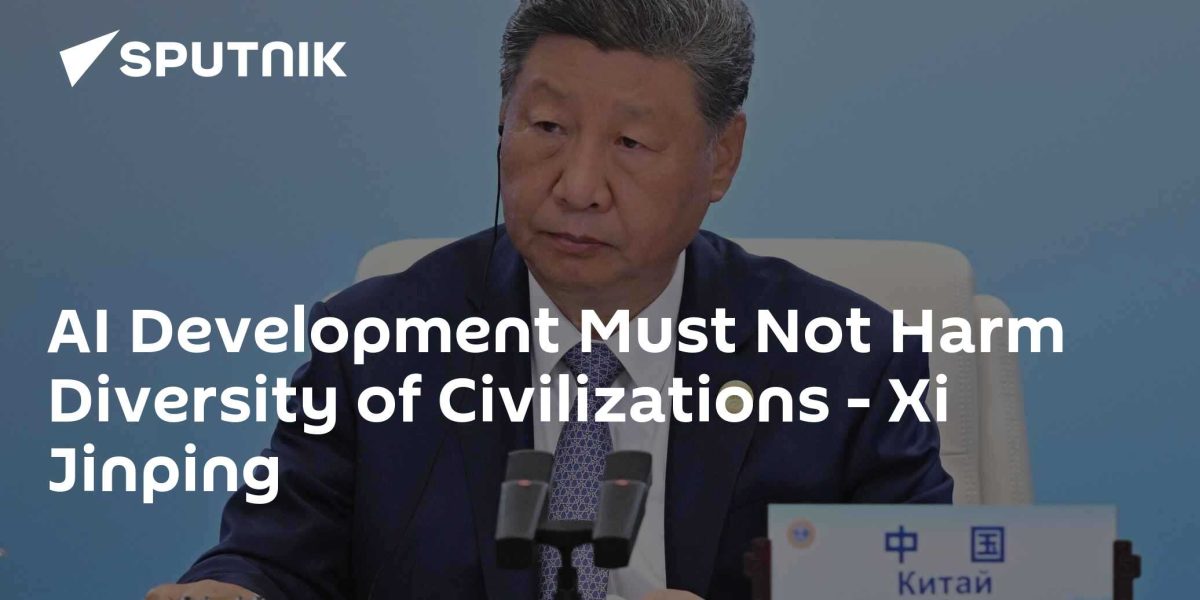
Xi Jinping Warns AI Development Must Respect Cultural Diversity
Chinese President Xi Jinping is sounding the alarm about the risks of unchecked AI development, emphasizing the importance of preserving cultural diversity and human control over these systems. Speaking at a major international forum, Xi Jinping stressed that AI should be developed and applied in a way that respects and values the unique characteristics of different world civilizations and national cultures.
The need for responsible AI development has become a pressing concern for leaders worldwide as the technology continues to advance at an incredible pace. With AI increasingly embedded in all aspects of modern life, the risk of cultural homogenization looms large. Xi Jinping’s warning underscores the urgency of finding a balance between technological progress and preserving humanity’s rich cultural heritage.
Human Oversight is Key
Xi Jinping’s comments align with growing concerns about the potential consequences of unregulated AI development. The Chinese leader’s emphasis on human control over AI systems highlights the importance of ensuring that these technologies serve humanity, rather than the other way around. This involves implementing robust safeguards, such as transparency, explainability, and accountability, to prevent AI systems from perpetuating biases and discriminations.
Preventing Cultural Homogenization
The diversity of world civilizations and national cultures is a prized asset of human society, representing the cumulative knowledge, wisdom, and creativity of countless generations. By prioritizing cultural diversity, Xi Jinping’s vision for AI development acknowledges the unique value of these cultural expressions and the importance of preserving them for future generations. This approach also recognizes the potential risks of AI-driven cultural homogenization, where the dominance of a single cultural or linguistic group erases the distinctiveness of others.
What this means: The development of AI should prioritize responsible and transparent practices that preserve cultural diversity and human control. This requires policymakers, businesses, and civil society to work together to establish and enforce strong guardrails for AI development, ensuring that these technologies serve humanity and our shared cultural heritage.