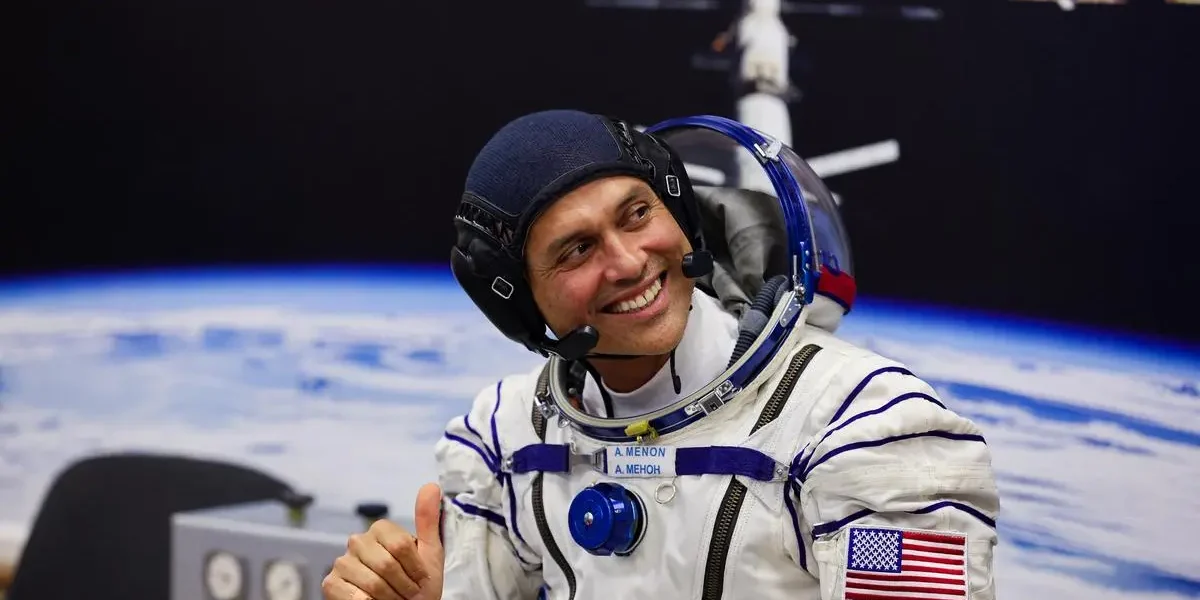
NASA astronaut Anil Menon has just become one of the 300 people to set foot on the International Space Station, alongside two Russian cosmonauts in a Soyuz MS-29 spacecraft.
This eight-month ISS mission marks a unique opportunity for Menon to conduct research on long-duration spaceflight, microgravity, artificial intelligence, and advanced medical technologies – areas that are both crucial to future deep space exploration and have potential applications back on Earth.
## What’s at Stake
AI Research in Orbit
Menon’s involvement in AI research on the ISS is particularly significant, given the growing importance of developing intelligent systems that can operate effectively in space. With the increasing reliance on robots and autonomous systems for space exploration and maintenance, reliable AI performance is vital.
For instance, AI-powered systems are being explored for use in robotic arms, satellite navigation, and even space station management. By studying how AI behaves in the unique conditions of space – where gravity, radiation, and other factors can affect performance – scientists like Menon can develop more robust and efficient AI systems.
## ISS Medical Research
Mirroring Future Challenges
Menon’s research on advanced medical technologies will also focus on addressing the unique health challenges associated with long-duration spaceflight. This is crucial, as future missions to Mars and beyond will require astronauts to withstand prolonged exposure to space’s harsh environment.
Researchers are exploring novel treatments for bone loss, muscle atrophy, and vision impairments, all of which can occur during extended space travel. Menon’s work will contribute to the development of these new medical solutions, helping ensure that future human spaceflight missions are safer and more successful.
## What this Means
The experience gained by researchers like Anil Menon will have far-reaching implications for both space exploration and medicine. The knowledge and technologies developed during this mission will pave the way for even more ambitious space endeavors and potentially life-saving innovations back on Earth.