The US, Japan, and South Korea Unite to Export Small Modular Reactors: A Blow to Russian and Chinese Nuclear Influence
The US, Japan, and South Korea have formed a trilateral partnership to export small modular reactors (SMRs), a move that could revolutionize global energy dynamics.
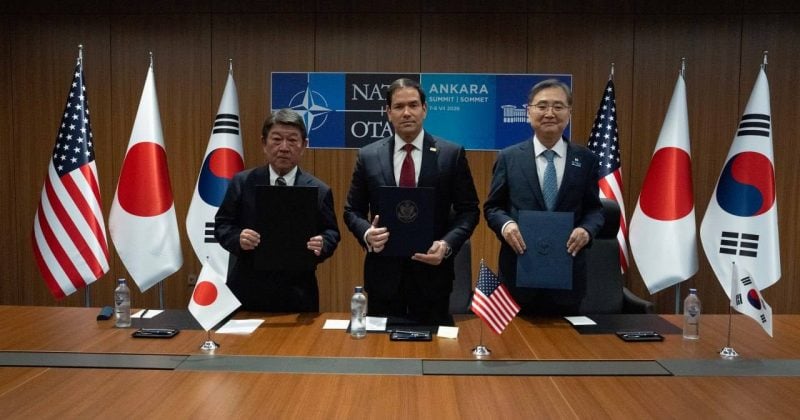
The trilateral memorandum signed at the recent NATO summit puts SMR technology at the center of an Indo-Pacific energy strategy, aiming to counterbalance the rising influence of Russia and China in the region.
The SMR technology has been a long time coming, but it’s finally being recognized for its potential to reshape the global energy landscape. These smaller, more efficient reactors can be manufactured en masse and deployed in a variety of settings, from remote communities to urban areas.
One of the key benefits of SMRs is their reduced carbon footprint. They produce less waste and require less cooling water than traditional nuclear reactors, making them a more environmentally friendly option. This is particularly important in regions where water scarcity is a major concern.
The trilateral initiative is being driven by a desire to reduce dependence on Russian and Chinese nuclear energy, as well as to promote a cleaner, more sustainable energy future. The three countries are already among the world’s leading exporters of energy-related technology, and this partnership is expected to create new opportunities for industry growth and collaboration.
What This Means for the Global Energy Market
The implications of this partnership are far-reaching, with potential to disrupt traditional energy markets and create new opportunities for investors and consumers alike. With the threat of climate change looming large, the adoption of SMRs could be a crucial step towards a more sustainable energy future.
As the US, Japan, and South Korea continue to develop and export SMR technology, it’s likely that other countries will take notice and follow suit. This could lead to a paradigm shift in the global energy landscape, with smaller, more efficient reactors becoming the norm.
The Future of Energy: A Shift Away from Traditional Nuclear Power
The SMR initiative marks a significant shift away from traditional nuclear power, which has long been dominated by Russian and Chinese suppliers. This could have significant implications for the global energy market, with potential to reduce dependence on foreign energy sources and create new opportunities for domestic industry growth.
As the world continues to transition towards a cleaner, more sustainable energy future, the adoption of SMRs could be a crucial step towards reducing carbon emissions and promoting energy security.