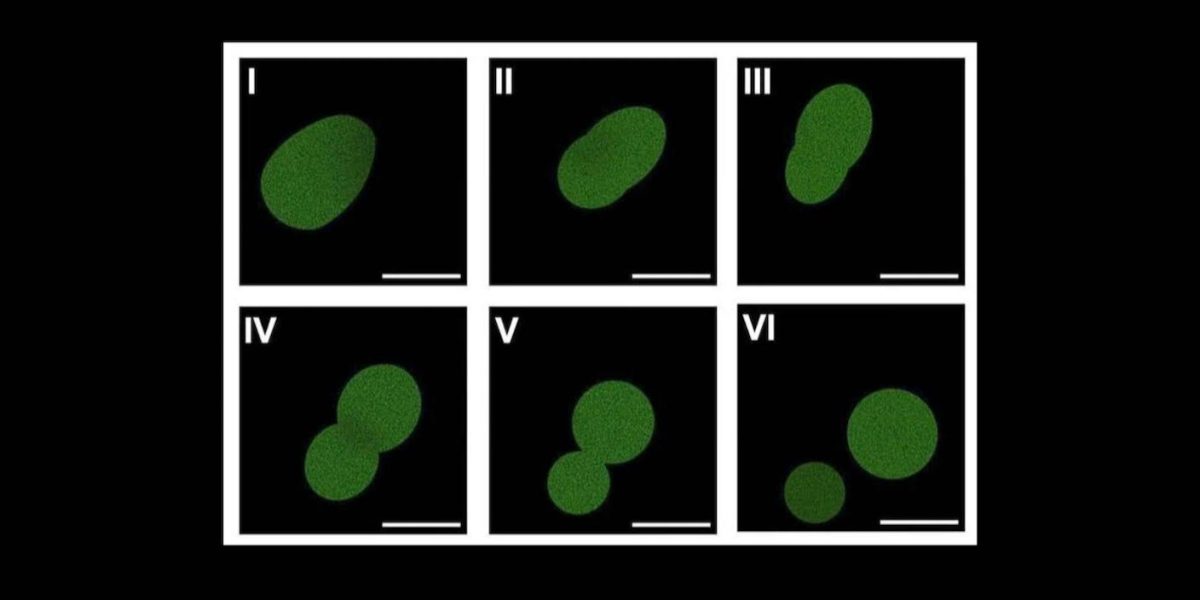
A team of synthetic biologists has created a synthetic cell called SpudCell that grows, copies its DNA, and produces offspring – but it’s still very much dead.
That might sound like a contradiction, but it’s not. This synthetic cell is the latest achievement in the field of synthetic biology, which aims to construct artificial life from scratch using non-living components. The breakthrough was announced recently in a paper published in the journal Nature, and it’s a significant step forward for the field.
How it was made
The team used a combination of genetic engineering techniques to design and build SpudCell. They started with a mixture of lipids, sugars, and other molecules that serve as the building blocks of cell membranes. They then added a synthetic genome, which is essentially a computer program encoded in DNA that tells the cell what to do.
The synthetic genome was designed to trigger the growth of the cell membrane, allowing it to engulf and digest nutrients from its surroundings. The cell then began to copy its DNA, producing new copies of the genome that could be passed on to future generations.
What it means
This achievement is significant because it shows that it’s possible to create a self-sustaining system that can grow and reproduce using non-living components. While SpudCell is not living, it’s a major step towards building artificial life that could potentially be used in a variety of applications, from medicine to biotechnology.
“This is a really exciting development,” said George Church, a synthetic biologist at Harvard University. “It shows that we can create complex systems that can behave like living cells, but are actually just computers running a program.”
Church and his colleagues believe that this technology could be used to create new types of biofuels, clean up environmental pollutants, and even develop new treatments for diseases. While these applications are still in the early stages of development, the creation of SpudCell is a major milestone that brings us closer to realizing the potential of synthetic biology.
The future of synthetic biology
The creation of SpudCell is a testament to the power of synthetic biology, which is a rapidly advancing field that’s pushing the boundaries of what we thought was possible. As researchers continue to develop new technologies and techniques, we can expect to see even more innovative applications of synthetic biology in the years to come.
For now, the creation of SpudCell is a reminder that the line between life and non-life is becoming increasingly blurred. While SpudCell is still very much dead, it’s a step closer to creating artificial life that could potentially change the world.