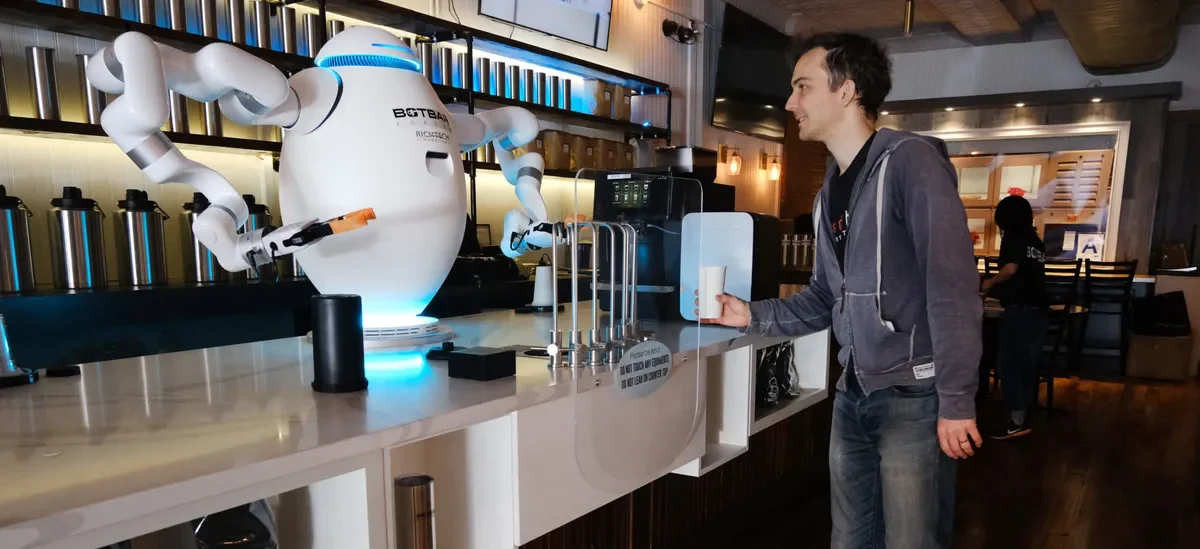
A new wave of companies is reversing course after laying off employees in the name of artificial intelligence. Just last year, Retail giant Macy’s and tech firm Accenture were among the many that cited the need for more efficiency and automation due to AI advancements.
A Shift in Perspective
It now appears that the pendulum is swinging back in the opposite direction. After conducting layoffs, these companies are starting to rehire some of the employees they let go, citing the need for human interaction and nuance in customer service and other areas where AI is showing limitations.
The AI revolution has been touted as a way to streamline business and boost productivity, but many employers are finding that robots can’t replace all humans just yet. One major obstacle is the complexity of human emotions and empathy, which AI systems are still struggling to replicate.
For example, while AI can analyze vast amounts of data and provide helpful insights, it often falls short when it comes to understanding the subtleties of human behavior. In the retail sector, customers may not always be forthcoming with information, and AI systems can struggle to pick up on nonverbal cues like body language and tone of voice.
The Limitations of AI
Accenture, which let go of 19,000 employees in 2022 citing automation, is now rehiring some of those workers to help with customer service and other tasks. Similarly, Macy’s has announced plans to bring back some employees to help with store operations and customer interactions.
Experts say that this shift in perspective is a sign that companies are beginning to understand the limitations of AI. “While AI can certainly augment human capabilities, it’s not a replacement for human workers,” says Dr. Rachel Kim, an AI expert at Stanford University. “Companies are starting to realize that the value of human workers lies not just in their ability to perform tasks, but also in their capacity for empathy, creativity, and problem-solving.”
What this means
For job seekers and workers in industries that have been impacted by AI, this news may come as a welcome relief. It suggests that while AI may change the nature of work, it won’t necessarily displace human workers entirely. Instead, it may create new opportunities for workers to develop skills that complement AI capabilities and enhance human productivity.