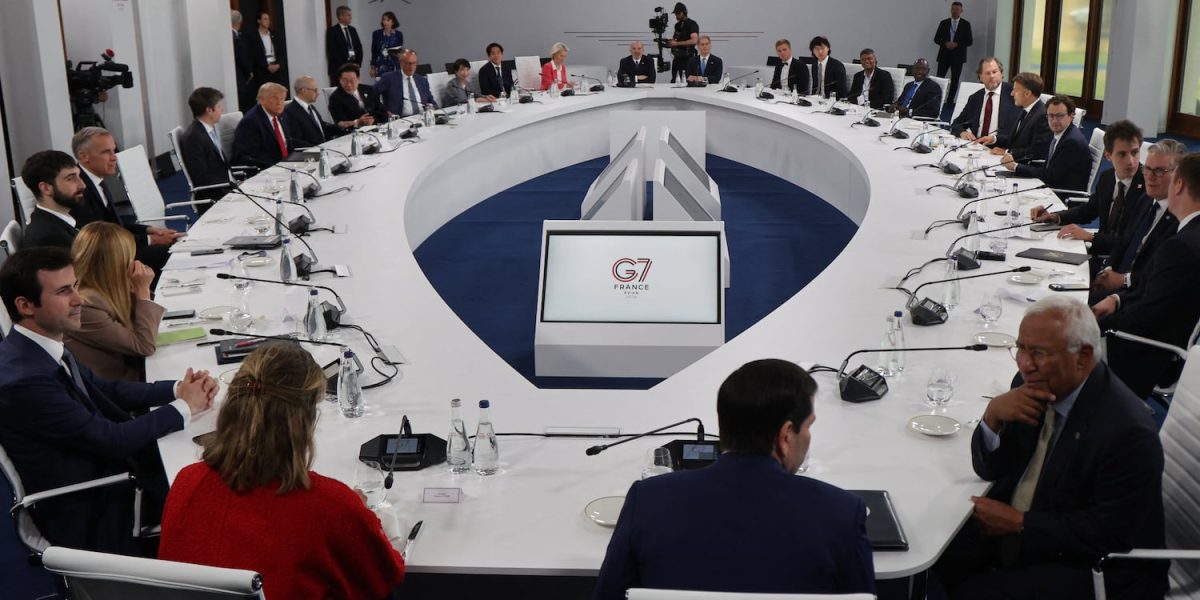
Ahead of a major EU-US summit, European Commission President Ursula von der Leyen announced plans to accelerate the bloc’s digital transformation, setting a target for 70% of all public services to be digitalized by 2025.
Europe Seeks Tech Autonomy as US Tensions Rise
One doesn’t often hear senior officials from the European Union, with its centralized governance of 27 member countries, talk about sovereignty. But that was very much at the heart of the agenda during the European Commission’s annual conference, where President Ursula von der Leyen laid out a vision for the bloc’s digital future.
The push for technological sovereignty is a direct response to what European officials see as an escalating schism with the US, driven by Donald Trump’s increasingly protectionist policies. The EU is worried that as the US becomes more isolated, it will have less interest in collaborating on AI development, a field where both sides have so much to gain.
Experts warn that a breakdown in transatlantic cooperation could have devastating consequences for the global AI industry. “If we can’t agree on a set of standards and norms for AI development, we risk fragmenting the market,” says Mark Walsh, a leading researcher in AI ethics at the University of Cambridge. “That would slow down innovation and increase the risk of accidents.”
European Commission Takes Action
The European Commission is planning to invest €100 billion in digital infrastructure and AI research over the next five years. This includes a focus on developing more advanced AI capabilities, such as artificial general intelligence (AGI), which is seen as a key driver of future economic growth.
The EU’s commitment to AI development is also motivated by a desire to create jobs and stimulate economic growth in regions that have been left behind by globalization. “We want to make sure that the benefits of AI are shared by everyone, not just by a handful of tech giants,” says Frans Timmermans, the Commission’s Executive Vice-President for European Green Deal.
What this means
The EU’s push for technological sovereignty has significant implications for the global AI industry. As the US and Europe go their separate ways, other regions, such as Asia, may be tempted to fill the gap in AI cooperation. This could lead to a fragmentation of the market, with different regions developing their own AI standards and norms. Ultimately, this would slow down innovation and increase the risk of accidents. The stakes are high, and it remains to be seen whether the US and EU can agree on a collaborative approach to AI development.