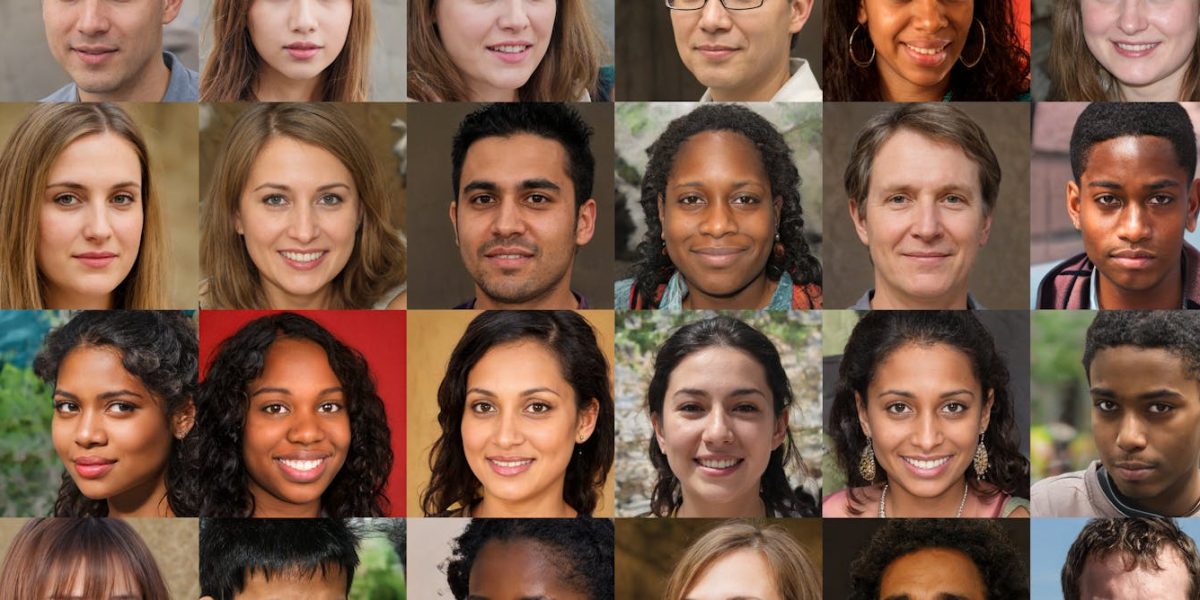
AI-Generated Faces Get Realer, But the Telltale Signs are Hard to Spot
AI-generated faces have reached an unsettling level of authenticity, making it increasingly difficult for people to distinguish them from real ones. Researchers at **Nightingale** have found that deepfake faces, created using artificial intelligence, don’t exhibit the obvious ‘weirdness’ that often accompanied this technology in the past.
A new study reveals that these AI-generated faces have become ‘hyperaverage’, which means they conform to the average features of a population rather than showcasing exaggerated or unrealistic characteristics. This shift in AI-generated faces is making it harder for humans to detect them, as the trained eye is now more likely to spot anomalies within these very subtle, very realistic depictions.
Hyper-Average Faces: A Red Flag for AI-Generated Images
Deepfake faces may not be as immediately recognizable as they once were, but the people looking at them have begun to notice something off: the uncanny uniformity of AI-generated images. These faces lack the natural imperfections, like freckles or asymmetry, that are typical of human appearance. Researchers argue that a ‘trained eye’ can now recognize these subtle inconsistencies – a skill that’s essential in combating the spread of AI-generated misinformation.
What This Means
As AI-generated faces continue to improve, the stakes have gotten higher. With a potential economic impact of **US$40 billion** in the next 5 years, researchers are sounding the alarm: our ability to spot AI-generated faces matters. While it’s unlikely that most people will be able to detect these images, those who can – like law enforcement officials, forensic experts, and AI engineers – must stay one step ahead of the technology to prevent its misuse. As deepfakes become increasingly sophisticated, it’s crucial that we develop better techniques for identifying them, before it’s too late.