RGGI’s Emission Reduction Efforts Fail to Meet Expectations
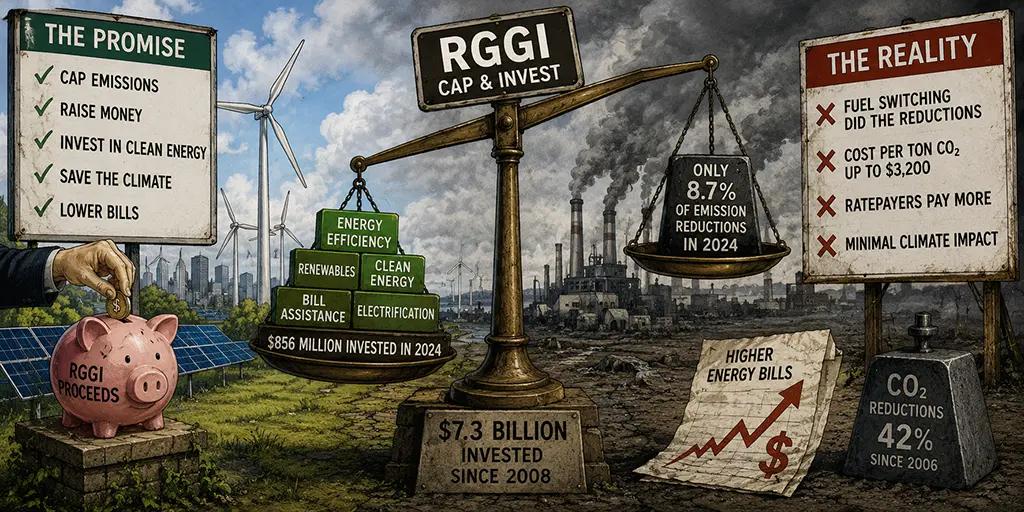
A new report from the Regional Greenhouse Gas Initiative (RGGI) reveals a stark reality: the organization’s efforts to reduce emissions are falling short of expectations. Despite touting its cap-and-invest program as a success, the RGGI’s own data suggests otherwise. The amount raised from investment of proceeds is woefully inadequate to meet the required emission reductions outlined in the Third Program Review.
RGGI’s Investment Proceeds Fall Far Short
The RGGI’s annual Investments of Proceeds report, released on June 26, 2026, highlights a glaring discrepancy between the organization’s claims and its actual performance. The report shows that the funds generated from auctions of greenhouse gas allowances are not being used to their full potential in reducing emissions. In fact, the total amount raised falls short of the funds necessary to meet the emission reduction targets set forth in the Third Program Review.
A Failure to Leverage Investment Proceeds
Cap-and-invest programs like RGGI are designed to generate revenue from the sale of greenhouse gas allowances, which is then invested in clean energy projects and other initiatives to reduce emissions. However, the RGGI’s investment of proceeds report suggests that the organization is not leveraging this revenue stream to its full potential. As a result, the emission reduction goals outlined in the Third Program Review are unlikely to be met.
What this means
For the millions of people who are counting on RGGI to help mitigate the effects of climate change, this news is a disappointment. The RGGI’s failure to invest its proceeds effectively raises questions about the program’s ability to deliver on its promises. It’s clear that more needs to be done to ensure that the revenue generated from auctions of greenhouse gas allowances is being used to drive real emission reductions.