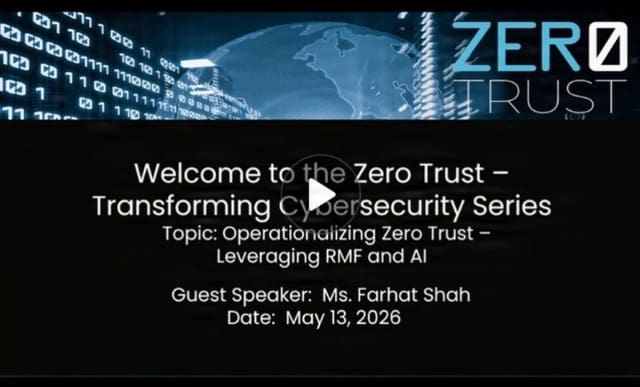
The US Army’s AI-powered Zero Trust initiative has just become a whole lot faster. A team of innovators at the Communications-Electronics Command Army Software and Innovation Center has crafted an artificial intelligence tool that turbocharges the military’s shift to a Zero Trust security model.
Automating the Path to Zero Trust
Zero Trust is an approach to cybersecurity that assumes every network and system is compromised, and that users and devices must be continuously authenticated and authorized. It’s a fundamentally different way of thinking about security, one that prioritizes verification over traditional perimeter-based defenses.
The AI tool, developed in partnership with the Warfighting Acquisition University and the C5ISR Center, uses machine learning algorithms to analyze network traffic and automatically enforce Zero Trust policies. By automating this process, the tool can significantly speed up the transition to a Zero Trust model.
What this means
For the Army, this means faster deployment of secure networks and systems, without the need for manual configuration and monitoring. It’s a major step forward for a military that’s increasingly reliant on complex systems and networks.
This AI-powered Zero Trust tool is also a reminder that cybersecurity is a constantly evolving field, with new threats emerging all the time. The ability to quickly adapt and respond to these threats is critical, and AI is playing an increasingly important role in this effort.
The Army’s AI Momentum
The Army has been investing heavily in AI and machine learning over the past few years, with a focus on developing tools and systems that can support its warfighting capabilities. This Zero Trust tool is just the latest example of the military’s AI momentum, and it’s likely to have significant implications for the future of cybersecurity.
By automating the path to Zero Trust, the Army is creating a more secure and flexible network environment, one that’s better equipped to handle the increasingly complex threats of the digital age.