AI’s New Role in Breast Cancer Detection: A Conversation with Dr. John Lewin
Dr. John Lewin, a Yale radiologist, is leading the charge in harnessing artificial intelligence to detect breast cancer and predict future risk.
Mammograms 2.0: How AI is Revolutionizing Breast Cancer Screening
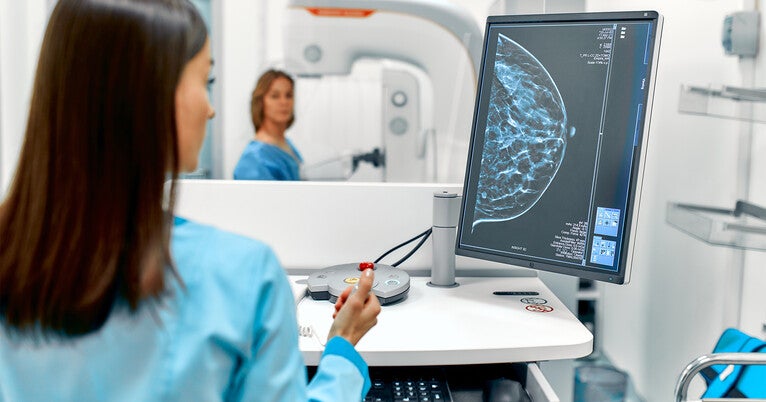
For decades, mammograms have been the gold standard for breast cancer detection. But AI is changing the game – or rather, the radiologist’s chair. We spoke with Dr. Lewin to understand the evolution of mammograms and how AI is set to transform them.
Dr. Lewin explains that the first mammograms were developed in the 1960s, when X-rays were used to capture images of the breast. The technology has since improved significantly, with the introduction of digital mammography in the 1990s. However, even with advancements, mammograms can be uncomfortable and often produce inconclusive results.
From Detection to Prediction: AI’s Role in Breast Cancer Risk Assessment
The real magic happens when AI is applied to mammogram data. Dr. Lewin outlines that AI algorithms can analyze thousands of images per second, identifying patterns that a human might miss. This enables radiologists like Dr. Lewin to not only detect cancer but also predict a patient’s future risk.
Dr. Lewin notes that AI is not intended to replace human radiologists but rather augment their abilities. By leveraging AI, Dr. Lewin and his team can make more accurate diagnoses and provide patients with a better understanding of their risk. This shift from detection to prediction is a significant step forward in breast cancer treatment – and one that AI is making possible.
What this means: Patients can expect more accurate diagnoses and a better understanding of their risk, thanks to AI-powered mammograms. As AI continues to evolve, we can expect even more efficient and effective breast cancer screening – a major breakthrough in the fight against this devastating disease.
Dr. Lewin emphasizes that AI is a tool, not a replacement for human expertise. By combining the strengths of both, he hopes to improve breast cancer detection rates and ultimately save lives. With AI at the helm, the future of mammograms looks brighter than ever.