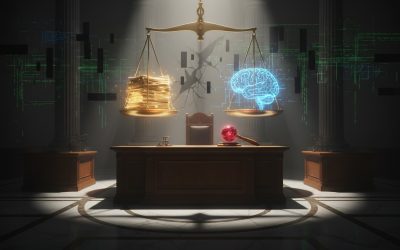
Teachers in the US are facing a daunting task: figuring out how to harness AI’s power in their classrooms.
Avoiding an AI Skills Gap
The Department of Education seems to be lagging behind when it comes to embracing artificial intelligence. This has left teachers feeling overwhelmed and unsure of how to integrate AI into their teaching methods. According to Randi Weingarten, president of the American Federation of Teachers, this is a pressing issue: “If we don’t figure out how to use AI effectively in the classroom, we’re going to perpetuate a skills gap that will leave our students unprepared for the workforce of the future.”
The Problem with AI in Education
It’s not just about adapting to new technology; it’s about understanding how AI is changing the nature of learning itself. “AI has the potential to personalize education, to provide real-time feedback, and to make learning more accessible,” says Weingarten. “But it also raises important questions about equity and access. If AI is only available to those who have the resources to access it, we’re going to exacerbate existing inequalities in the education system.”
What this means for teachers
For teachers, this means a lot of experimentation and trial-and-error as they try to figure out how to use AI in their classrooms. It also means a lot of uncertainty about how to assess student learning, since AI-generated content can be difficult to distinguish from human-generated content. In the end, it’s not just about embracing technology for its own sake, but about using it to create a more effective and equitable learning environment.