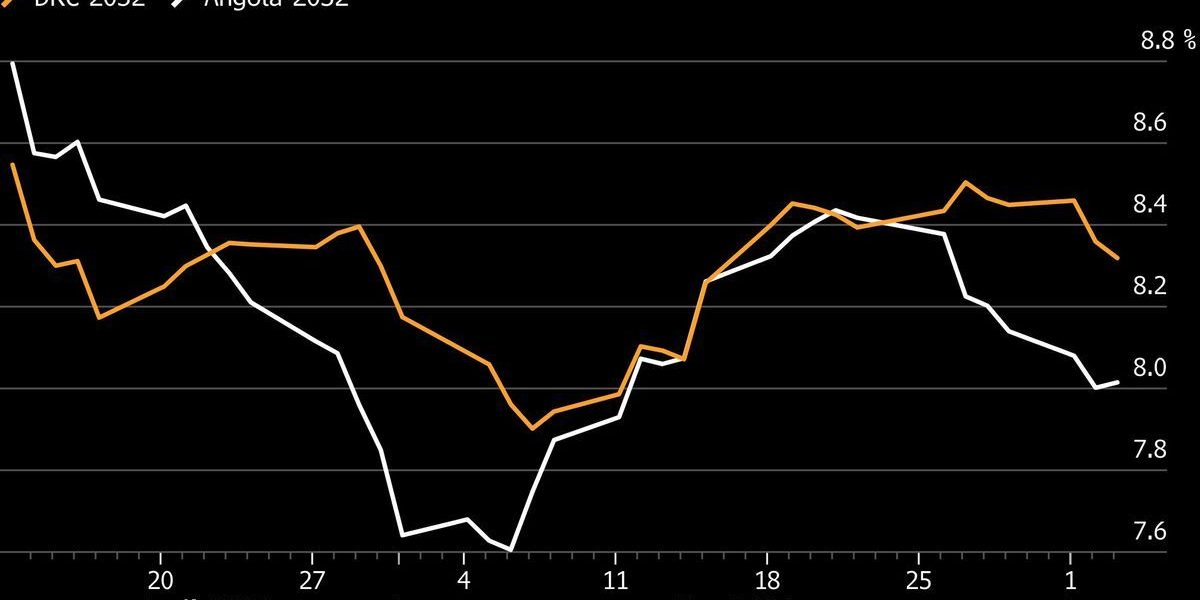
Despite the ongoing Ebola outbreak, the Democratic Republic of Congo’s Eurobonds continue to attract investors, who are lured by unusually high yields.
Buoyed by metals demand
The DRC’s Eurobonds, which are essentially debt securities issued by the country to raise capital, have surprisingly defied the global market’s concerns about the Ebola outbreak. This resilience can be attributed to the DRC’s rich deposits of cobalt, a crucial metal used in the production of lithium-ion batteries that power smartphones, laptops, and most importantly, the development of artificial intelligence (AI) systems. As demand for AI continues to grow, and with the DRC being one of the world’s largest cobalt producers, investors see it as a rare opportunity to tap into this lucrative market.
Investors seek rare yields
The DRC’s Eurobonds offer significantly higher yields compared to other African nations, making them an attractive option for investors seeking to maximize their returns. The country’s sovereign debt has been classified as ‘junk’ by major credit rating agencies, which in turn has driven up yields. This high-yield environment is particularly appealing to investors who are willing to take on more risk in pursuit of higher returns.
What this means
For investors, the DRC’s Eurobonds offer a rare chance to capitalize on the growing demand for cobalt, a critical component in the AI boom. However, this investment comes with significant risks, including the ongoing Ebola outbreak, which could further destabilize the country’s economy. As investors weigh the pros and cons, it’s essential to remember that investing in high-risk, high-yield bonds can be a double-edged sword, and caution should be exercised when making such decisions.