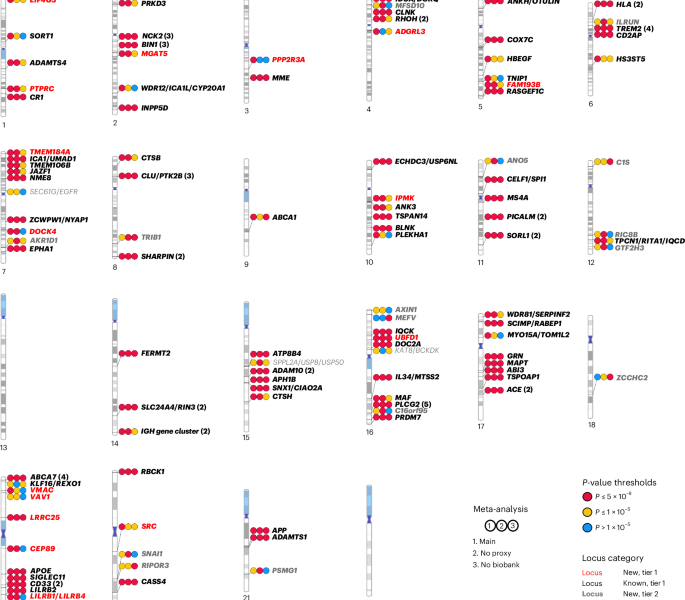
A team of French researchers has pinpointed 91 genetic risk factors for Alzheimer’s disease and related dementias in individuals of European ancestry.
The study, led by **Dr. Céline Bellenguez**, pooled data from existing genome-wide association studies (GWAS) to create a massive dataset of over a million individuals, including those with and without Alzheimer’s disease. By analyzing the genetic variations within this pool, the researchers identified 91 regions in the genome that are more commonly associated with the disease.
Alarming Clues
Among these 91 risk loci, 56 were specifically linked to clinically diagnosed Alzheimer’s disease cases. This suggests that genetic factors play a significant role in the development of the disease, which affects millions worldwide. The researchers also found that certain genetic risk factors were more common in individuals of European ancestry, which could have implications for targeted treatments and prevention strategies.
One of the 91 risk loci, discovered on **chromosome 12**, is particularly noteworthy. This region of the genome contains a gene called CLU, which has been previously associated with Alzheimer’s disease. The discovery highlights the importance of this gene in the disease’s etiology and provides a potential target for future treatments.
What this means
The discovery of these 91 genetic risk factors is a significant step forward in understanding the genetic underpinnings of Alzheimer’s disease. It could lead to the development of personalized treatment plans, allowing doctors to tailor their approach to an individual’s unique genetic profile. While the study does not offer a cure, it provides crucial insights into the disease’s mechanisms and offers hope for future breakthroughs.