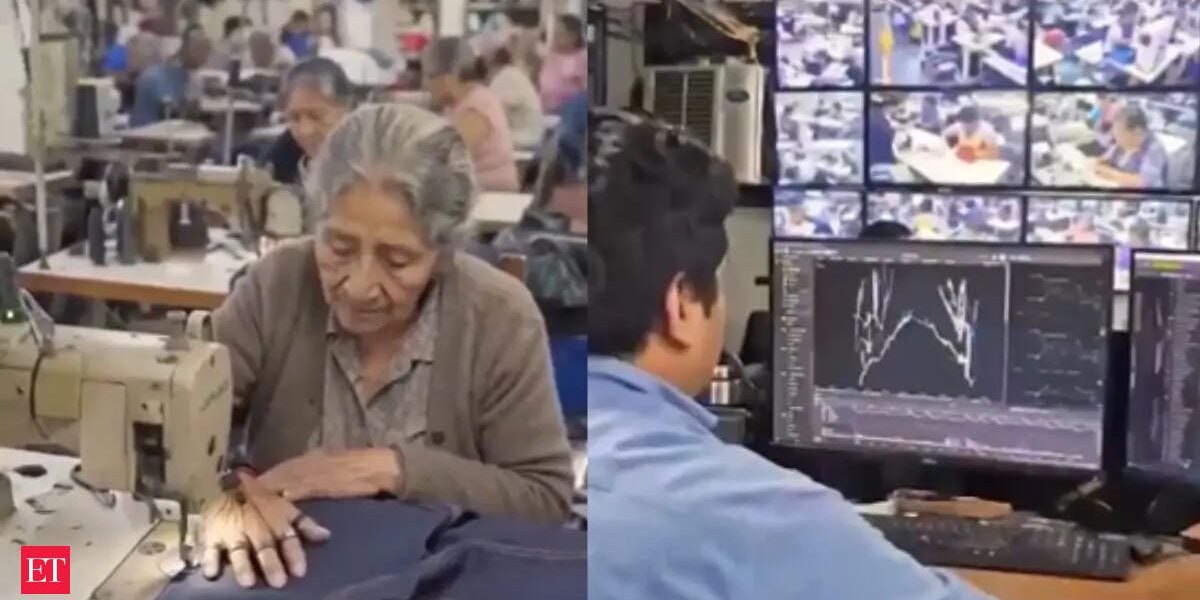
A glimpse into the future of manufacturing has been shared by Indian industrialist Harsh Goenka, who recently posted a video showcasing garment workers wearing sensors on their hands. These sensors capture intricate hand movements, allowing artificial intelligence (AI) and robots to be trained on a wide range of tasks.
The video offers a fascinating look into how emerging technologies like machine learning and computer vision might transform traditional manufacturing processes. By collecting data on workers’ hand movements, manufacturers can automate tasks that were previously too complex or time-consuming for AI and robots to master.
AI-Powered Automation
Experts believe this technology has the potential to revolutionize the way factories operate, potentially reducing production costs and increasing efficiency. With AI and robots learning from the data collected by the wearable sensors, manufacturers can optimize their processes and improve product quality.
One of the key drivers behind this trend is the need for speed and precision in modern manufacturing. As consumer demand for customized and unique products continues to grow, manufacturers are under pressure to deliver high-quality goods at scale. AI-powered automation offers a solution to this challenge, allowing factories to respond quickly to changing demands and adapt to new production requirements.
What this means
In practical terms, this technology could lead to the creation of more flexible and adaptable manufacturing systems. With AI and robots learning from human workers, factories can adjust their processes in real-time, responding to changes in demand or supply.
For workers in the garment industry, this technology might also create new opportunities for upskilling and reskilling. As AI and robots take over routine tasks, workers may be able to focus on higher-value tasks that require creativity, problem-solving, and critical thinking.
The Future of Work
However, the widespread adoption of AI-powered automation also raises questions about the future of work in manufacturing. As machines and algorithms take on more tasks, what will happen to the jobs of human workers? While some may see this as a threat, others argue that AI-powered automation will create new opportunities for workers to develop the skills they need to thrive in an increasingly automated economy.