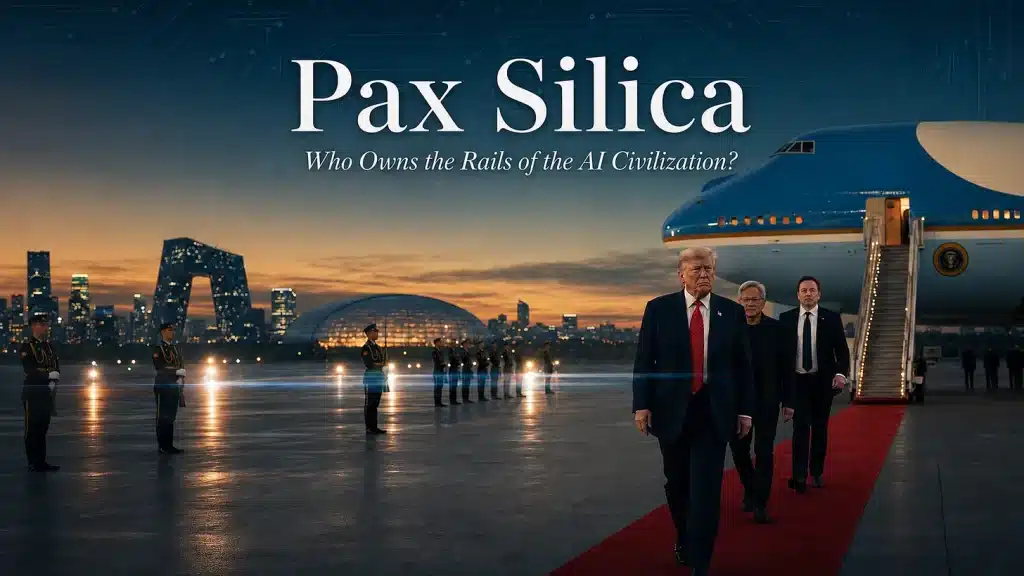
The Beijing Summit: America’s Corporate Heavy Hitters in AI Supply Chain Talks
President Trump arrived at the Beijing summit with a 18-person delegation of America’s most powerful corporate executives, including Elon Musk and Nvidia’s Jensen Huang, to negotiate the future of the AI supply chain.
The presence of these tech giants on Air Force One marks a significant shift in the global AI landscape. The meeting’s focal point is Pax Silica, a set of proposed guidelines that aim to regulate the flow of essential AI technologies, including hardware and software components.
American Interests
Among the attendees is Elon Musk, CEO of Neuralink and SpaceX, and Jensen Huang, CEO of Nvidia, a company with a significant stake in AI hardware and software development. Their participation reflects the pressing need for America’s top tech players to secure a favorable position in the global AI supply chain.
As one of the world’s leading tech hubs, America is facing stiff competition from China, which has made significant strides in AI development. The summit presents an opportunity for American corporations to assert their influence and safeguard their interests in the AI industry.
Pax Silica: A Proposal for Regulatory Harmony
Pax Silica aims to establish a framework for cooperation and governance in the AI sector. By regulating the flow of essential technologies, the proposal seeks to prevent the fragmentation of the AI industry and promote interoperability between different systems.
While Pax Silica may seem like a benevolent initiative, critics argue that it could be used to strangle innovation and create monopolies. The proposed guidelines may inadvertently favor companies with significant resources, stifling the growth of smaller, more agile players in the AI market.
What this means
The outcome of the Beijing summit will have far-reaching implications for the global AI industry. A successful Pax Silica agreement could lead to a more streamlined and efficient AI supply chain, but it also risks creating a concentration of power in the hands of a few giant corporations.
Consumers and businesses alike should be vigilant as the AI landscape continues to evolve. As the stakes grow higher, it’s crucial to understand the potential consequences of these negotiations and how they will shape the future of AI development.