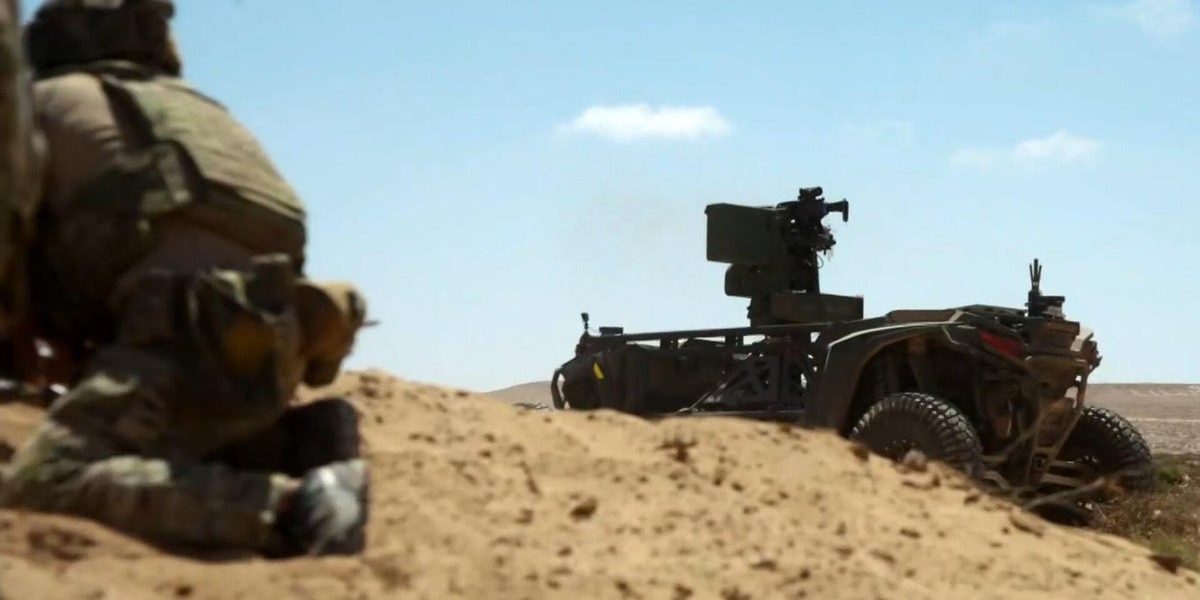
A U.S. military training exercise in Morocco was recently observed by journalists, revealing a pivotal role for artificial intelligence in battlefield operations.
AI-Driven Decision Making on the Front Lines
The exercise, part of a broader effort to integrate AI into military operations, saw troops using AI-powered systems to analyze vast amounts of data in real-time.
The systems, known as Joint All-Domain Command and Control (JADC2), use machine learning algorithms to process battlefield intelligence, identify patterns, and provide actionable insights to commanders.
What AI Does in War Games
Journalists observed troops using AI-powered tablets to visualize battlefield scenarios, track enemy movements, and identify potential targets.
One system, called the Distributed Common Ground System (DCGS), enables analysts to quickly identify and prioritize threats, allowing commanders to make informed decisions.
Air Force Major James Wilson, who helped develop the JADC2 system, explained that AI helps to reduce the time it takes to analyze data, enabling commanders to respond more quickly to changing battlefield conditions.
Practical Benefits of AI in War Games
The integration of AI into military operations has several practical benefits, including improved situational awareness, enhanced threat identification, and more effective decision-making.
According to a U.S. military spokesperson, AI has already played a key role in several high-profile military operations, including a recent counterterrorism campaign in the Middle East.
While the development and deployment of AI in military operations raise important questions about ethics and accountability, the U.S. military is committed to harnessing the technology to improve battlefield outcomes.
The JADC2 system, for example, includes built-in safeguards to prevent unintended bias and ensure that AI-driven decisions align with military policy and values.
What this means
The integration of AI into military operations represents a significant shift in the way commanders analyze and respond to battlefield data.
As the technology continues to evolve, it’s likely to play an increasingly important role in shaping military strategy and decision-making.