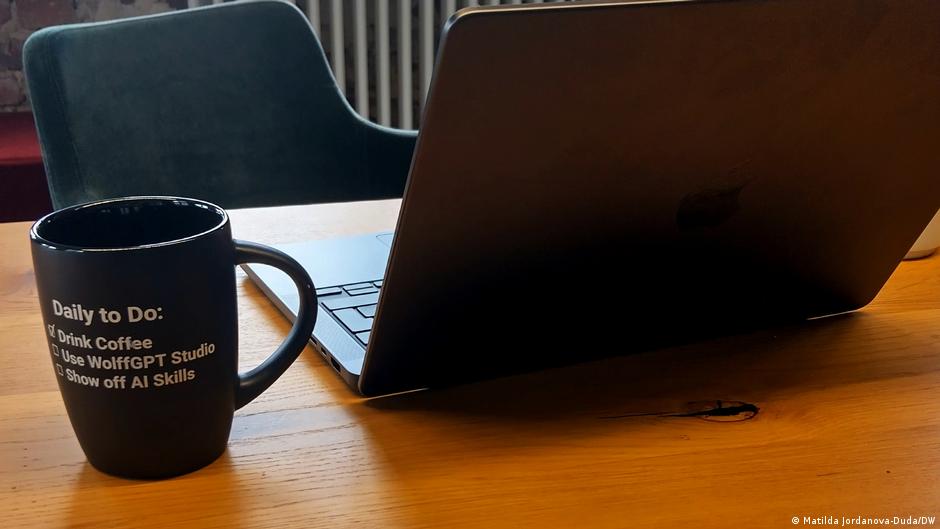
Germany’s Dr. Wolff cosmetics company bets big on AI
Family-run Dr. Wolff is embracing artificial intelligence to stay ahead in a crowded market. The company has started training all employees on Large Language Models (LLMs), hoping to create a workforce equipped to harness the power of AI.
The company’s deputy head of packaging, Inna Hilgenberg, highlighted that Dr. Wolff’s focus on production means they don’t have the bandwidth to develop in-house AI solutions. By upskilling their staff, they aim to level the playing field with larger competitors.
Dr. Wolff employs around 1,400 people, with a mix of experienced staff and new recruits. Hilgenberg mentioned that LLM training is becoming a regular part of their onboarding process.
‘Upskilling’ the workforce
The company is investing in AI literacy among employees, with Hilgenberg stating that they’re “busy enough with the production side of things” to develop their own AI solutions in-house. This strategy acknowledges the challenges and costs associated with building a dedicated AI team.
Employees are being encouraged to learn about AI and its applications in the packaging and cosmetics industries. This upskilling effort is aimed at enabling staff to identify opportunities and develop creative solutions using AI tools.
AI’s role in cosmetics manufacturing
The Dr. Wolff example highlights the growing need for companies in the cosmetics and pharmaceutical industries to adopt AI strategies. As competition continues to intensify, and consumer expectations rise, AI will play an increasingly important role in product development and marketing.
Dr. Wolff’s move into AI suggests that the company is prioritizing innovation and staying competitive. By leveraging AI, they’re focusing on areas like personalized product recommendations, supply chain optimization, and data-driven decision-making.
Implications for industry
The adoption of AI by a mid-sized cosmetics company like Dr. Wolff sends a signal to the industry: AI is no longer just a topic for large corporations or tech giants. It’s an essential tool for businesses seeking to stay competitive, and employee upskilling is key to unlocking its full potential.
Dr. Wolff’s success story shows that investing in AI literacy and infrastructure can help mid-sized companies remain relevant and innovative, even when competing against bigger players.
What this means: As AI becomes indispensable in the cosmetics and pharmaceutical industries, companies like Dr. Wolff will continue to lead the charge in adopting and showcasing AI’s potential.