Scientists Unleash Power of Glycans to Unlock Biological Secrets
Researchers have long struggled to understand the role of glycans, complex molecules composed of sugars, in various biological processes. However, recent advances in glycomics, the study of these molecules, have enabled the collection of large-scale datasets that could finally crack this decades-old puzzle.
Led by Goranka Lauc, experts have made significant strides in developing high-throughput glycoanalytical methods, which allow for the rapid analysis of glycans on a large scale. These methods have been particularly useful in longitudinal studies, where researchers examine the same biological samples over time to gain insights into the dynamics of glycan changes.
The recent publication by A. Cindri and T. Pribi highlights the potential of these large glycomics datasets to understand the function of glycans in aging and inflammaging, a condition characterized by chronic low-grade inflammation. By analyzing N-glycans, a type of glycan, in aging and inflammaging, researchers aim to identify specific glycan patterns associated with these conditions.
The Future of Glycomics Research
The progress in glycomics research has been rapid, with researchers now able to analyze hundreds of glycans in a single experiment. This has led to the identification of novel glycan biomarkers and a better understanding of the role of glycans in various diseases, including cancer and neurodegenerative disorders.
What this means
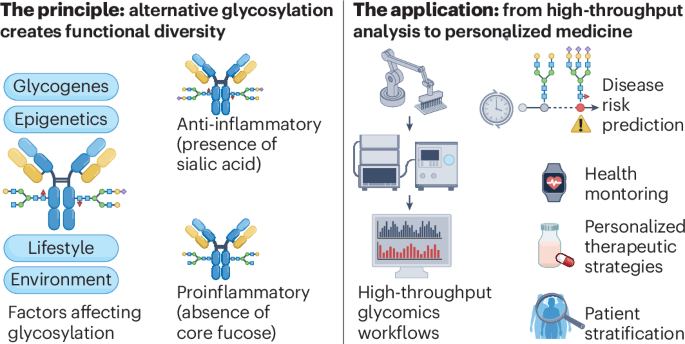
These advancements in glycomics research have significant implications for the field of biomarker discovery and personalized medicine. By identifying specific glycan patterns associated with various diseases, researchers can develop more accurate diagnostic tools and targeted therapies. Additionally, the large-scale datasets generated in these studies can be used to train machine learning algorithms, which can help predict disease outcomes and identify new therapeutic targets.
The Road Ahead
As researchers continue to push the boundaries of glycomics, we can expect to see significant breakthroughs in the field. By combining cutting-edge analytical techniques with machine learning algorithms, researchers can unlock the secrets of glycans and develop new treatments for diseases that have long been a challenge for scientists. The future of glycomics research looks bright, and it will be exciting to see where these advancements take us.