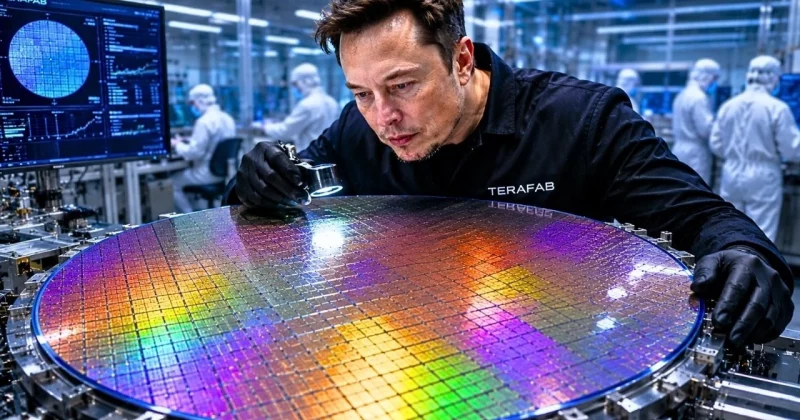
Elon Musk is putting up a staggering $119 billion to build a massive chip manufacturing facility called Terafab, which is poised to revolutionize the tech industry.
Terafab’s grand vision is to centralize chip production, a move that could significantly disrupt global supply chains and tech innovation. This behemoth of a semiconductor factory will serve not only Tesla but also xAI, Elon Musk’s AI research firm, and SpaceX, the cutting-edge space exploration company. The initial phase alone is estimated to cost a whopping $55 billion.
**Terafab: A Semiconductor Giant**
Terafab’s proposed $119 billion investment dwarfs that of major semiconductor players like Intel, which has a market capitalization of around $230 billion. This is a bold bet on the future of chip manufacturing. By centralizing production, Terafab could optimize supply chains, reduce costs, and increase efficiency. This could have far-reaching implications for various industries, from smartphones to supercomputers, and even space exploration.
**Impact on Global Tech**
Centralizing chip production could give Terafab significant leverage over the global semiconductor market. Currently, chip production is a fragmented industry with multiple manufacturers supplying various components to different industries. By consolidating production under one roof, Terafab could streamline the supply chain and reduce costs.
**What this means**
This massive investment in Terafab could have significant implications for the global tech industry, from reducing supply chain disruptions to increasing innovation. Companies that rely on specialized chips for their products may see improved quality and reduced lead times. However, it’s likely that Terafab’s dominance will also raise concerns about the industry’s competitiveness and potential monopolistic tendencies.
**The Road Ahead**
Elon Musk’s plans for Terafab are ambitious, to say the least. The project’s success will depend on several factors, including the availability of skilled labor, the efficiency of the manufacturing process, and the demand for specialized chips. If Terafab achieves its goals, it could revolutionize the way chips are designed, manufactured, and supplied. But for now, the project remains a work in progress, with many questions still unanswered.