
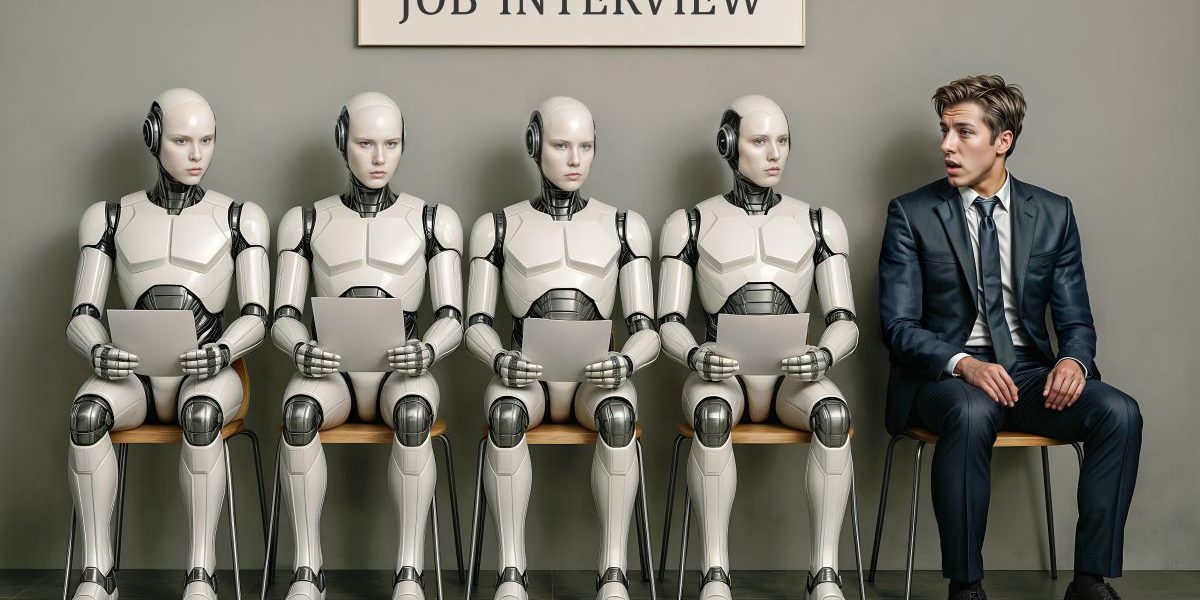
More than 40% of chief executives plan to axe junior roles in the next year or two as they shift the composition of their staff towards mid-level and senior workers.
Who Will Be Left Standing?
Artificial intelligence has often been portrayed as a threat to jobs, particularly among junior employees who may be more susceptible to automation. However, new research suggests that this trend could be about to flip – favoring older workers instead.
The numbers are stark: according to a new study, chief executives are planning to dramatically reduce the number of entry-level positions within their companies. This shift is likely to have significant implications for the workforce, not just in terms of job numbers, but also in terms of age demographics.
From Automation to Augmentation
One potential reason for this shift is that AI is being used to augment, rather than automate, certain tasks. While AI has undoubtedly improved business efficiency in many areas, it’s also creating new opportunities for human workers to focus on more complex and strategic tasks.
According to the study, AI-related job cuts are likely to be concentrated in roles that are routine, repetitive, or can be easily automated. However, as AI takes on these junior tasks, it’s also freeing up more senior and mid-level workers to focus on high-value tasks that require creativity, problem-solving, and strategic thinking.
What This Means
So, what does this mean for older workers? In short, it could be a blessing in disguise. As AI takes on junior roles, companies may be more willing to invest in and retain mid-level and senior workers, who possess the experience and expertise needed to drive business growth.
In an era where experience and skills are increasingly valued, older workers could find themselves in the driving seat. By leveraging their knowledge and expertise, they may be better equipped to adapt to the changing job market and thrive in a world where AI is playing an increasingly prominent role.
Of course, it’s worth noting that this is just a potential trend, and the job market is inherently unpredictable. However, if the numbers hold up, older workers could find themselves in a uniquely advantageous position – with the skills, experience, and adaptability needed to succeed, even as AI takes on more junior roles.