Americans are rising up against the construction of massive data centers in their hometowns, but a closer look reveals some unexpected benefits.
For years, the notion of data centers as a boon to local economies has been largely unquestioned, with tech giants building large facilities and reaping the tax benefits. However, a growing number of communities are speaking out against these massive “hyperscale” data centers, citing concerns over energy consumption, water usage, and property values.
Data Center Criticisms Mount
Social media campaigns and community organizing efforts have gained traction, with opponents painting a picture of data centers as energy-sucking behemoths that drain local resources. However, data centers are not inherently bad, and in fact, some are designed with sustainability in mind. Companies like Google and Microsoft have developed innovative cooling systems that use closed-loop designs, reducing water consumption and energy costs.
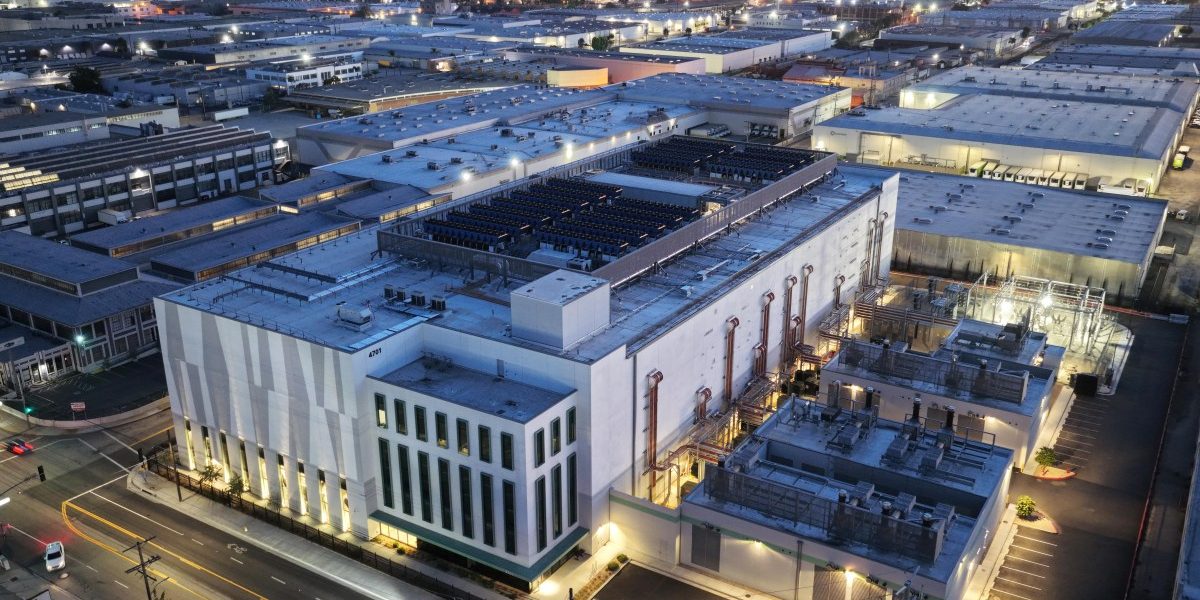
A case in point is the 33-megawatt data center in Vernon, California, which features a closed-loop cooling system and has become a model for eco-friendly data center design. The facility uses a combination of air-side and water-side economization to minimize its carbon footprint. This level of innovation could help mitigate concerns over data centers’ environmental impact.
A Silver Lining?
While data centers may not be the villains they’re made out to be, there are still legitimate concerns about their impact on local communities. However, the benefits of data center construction should not be entirely dismissed. For one, data centers can provide jobs and stimulate local economies, albeit often at the cost of high-paying jobs moving to low-wage areas. Additionally, some data centers are designed to be net-positive, producing more energy than they consume.
What this means is that, while data centers may not be a panacea for local economic growth, they do not necessarily need to be a source of strife. By embracing sustainable design and engaging with local communities, data centers can become a net positive force in their host towns.
The Future of Data Centers
As the debate over data centers continues to simmer, it’s clear that the industry is at a critical juncture. While opponents push for stricter regulations, proponents argue that data centers can be designed to be environmentally friendly and socially responsible. Ultimately, the future of data centers will depend on striking a balance between economic growth and environmental sustainability.